

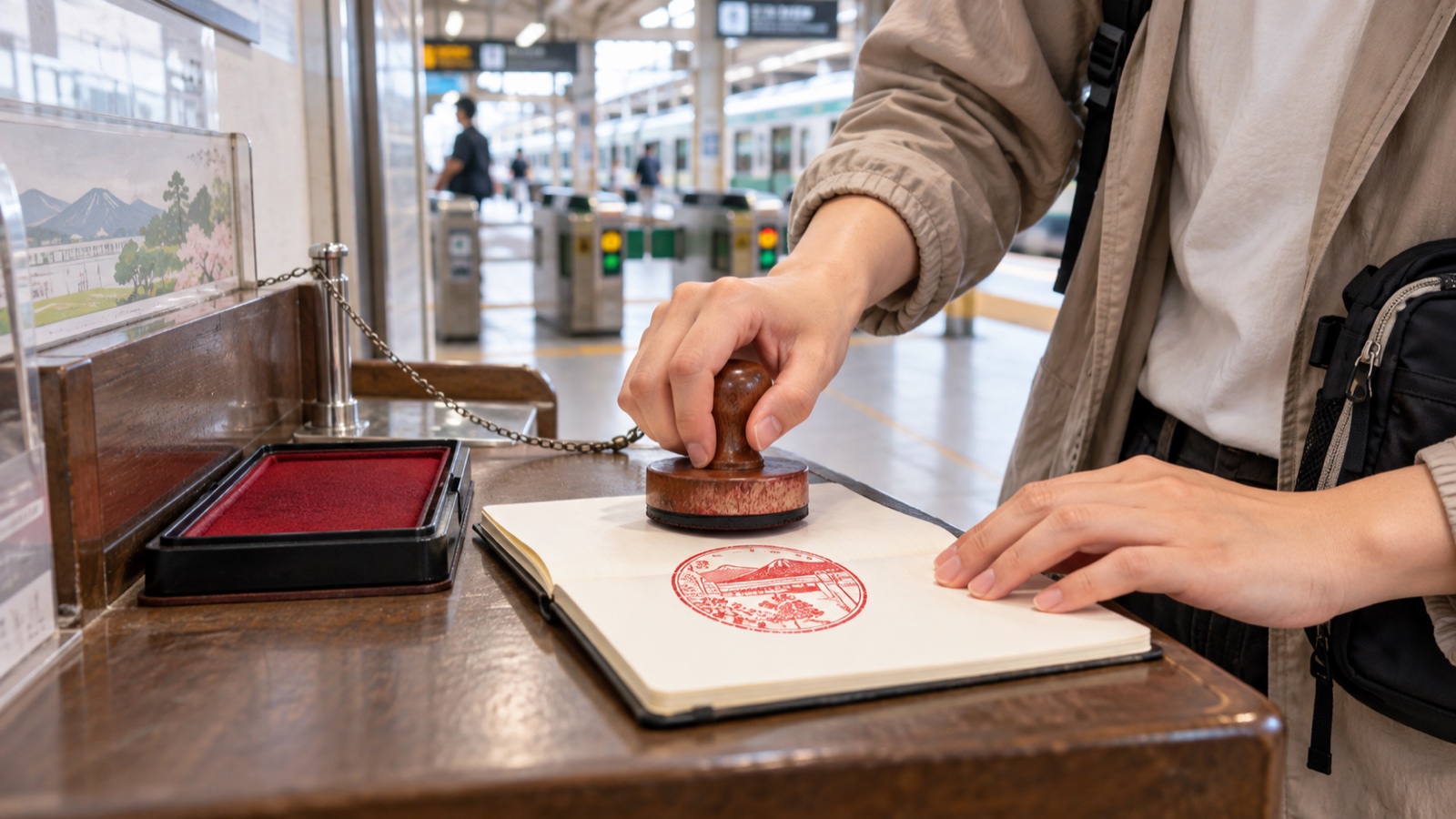
Station stamps turn a train journey into a personal travel journal. Some are permanent rubber stamps; others belong to temporary paper or digital rallies with deadlines and prize rules. They are not the same as shrine or temple goshuin. This guide explains what to bring, where to look and how to collect without delaying other passengers.
Know the four types
- Permanent station stamp: a local design, sometimes available only during staffed hours.
- Paper rally: a limited campaign with an official sheet and completion conditions.
- Digital rally: uses GPS, QR, NFC or an app; registration and data may be required.
- Roadside-station stamp: found at many michi-no-eki, with facility opening hours.
Station stamps are not goshuin
A station stamp is a travel souvenir. A goshuin is a devotional seal and calligraphy record from a shrine or temple, normally received in a dedicated goshuincho with an offering. Do not press tourist stamps into a goshuincho unless the religious site explicitly permits it.
What to bring
- A flat, uncoated notebook or the official sheet.
- A scrap page for a test impression, if permitted.
- A clear folder and a phone charger for digital rallies.
- Wet wipes for your hands—not for cleaning the operator’s stamp.
How to make a clean impression
- Check the stamp and pad without touching the design.
- Place the notebook on the flat surface.
- Ink evenly with gentle taps; do not grind the stamp.
- Press straight down once, lift straight up and let the page dry.
- Return the stamp neatly.
Where and when to find stamps
Look near ticket gates, information counters or station offices, but locations vary. A stamp may be inside the paid area, and an admission ticket may be required. JR East’s official information warns that placement and hours can change suddenly. Ask staff rather than crossing a gate without authorization.
Plan a rally without wasting a trip
- Use the organizer’s current page, not an old social post.
- Record dates, registration and required stamps.
- Check each spot’s hours and whether it is inside a ticketed area.
- Confirm prize stock, redemption place and deadline.
- Build the route around worthwhile travel, not only collecting.
Digital rally cautions
GPS permission, mobile data, browser settings or registration may be needed. Screenshot each successful check-in, but do not assume it replaces the official record. Never spoof a location or scan a code shared online.
Queue and station etiquette
- Prepare your page before reaching the table.
- Make one impression when others wait.
- Keep luggage out of passenger flow and accessible paths.
- Do not repair or re-ink equipment yourself.
- Travel normally; a rally does not waive fares.
If a stamp is missing or dry
Ask staff politely. It may have moved, be available on request or be withdrawn. Do not substitute another ink pad without permission because the wrong ink can damage rubber.
Useful Japanese
- Eki sutampu wa doko desu ka? — Where is the station stamp?
- Nanji made desu ka? — Until what time is it available?
- Nyūjōken wa hitsuyō desu ka? — Do I need an admission ticket?
FAQ
Are station stamps free?
Many are, but access may require a fare or admission.
Can I use my own ink?
Only with permission. Use the supplied pad.
Are all stations staffed?
No. At an unstaffed station, a stamp may be absent or located elsewhere.
Related guides
Sources checked October 31, 2026: JR East station-stamp information, JR Central digital rally, and JNTO roadside-station guide. Campaign details change; verify the organizer page.