


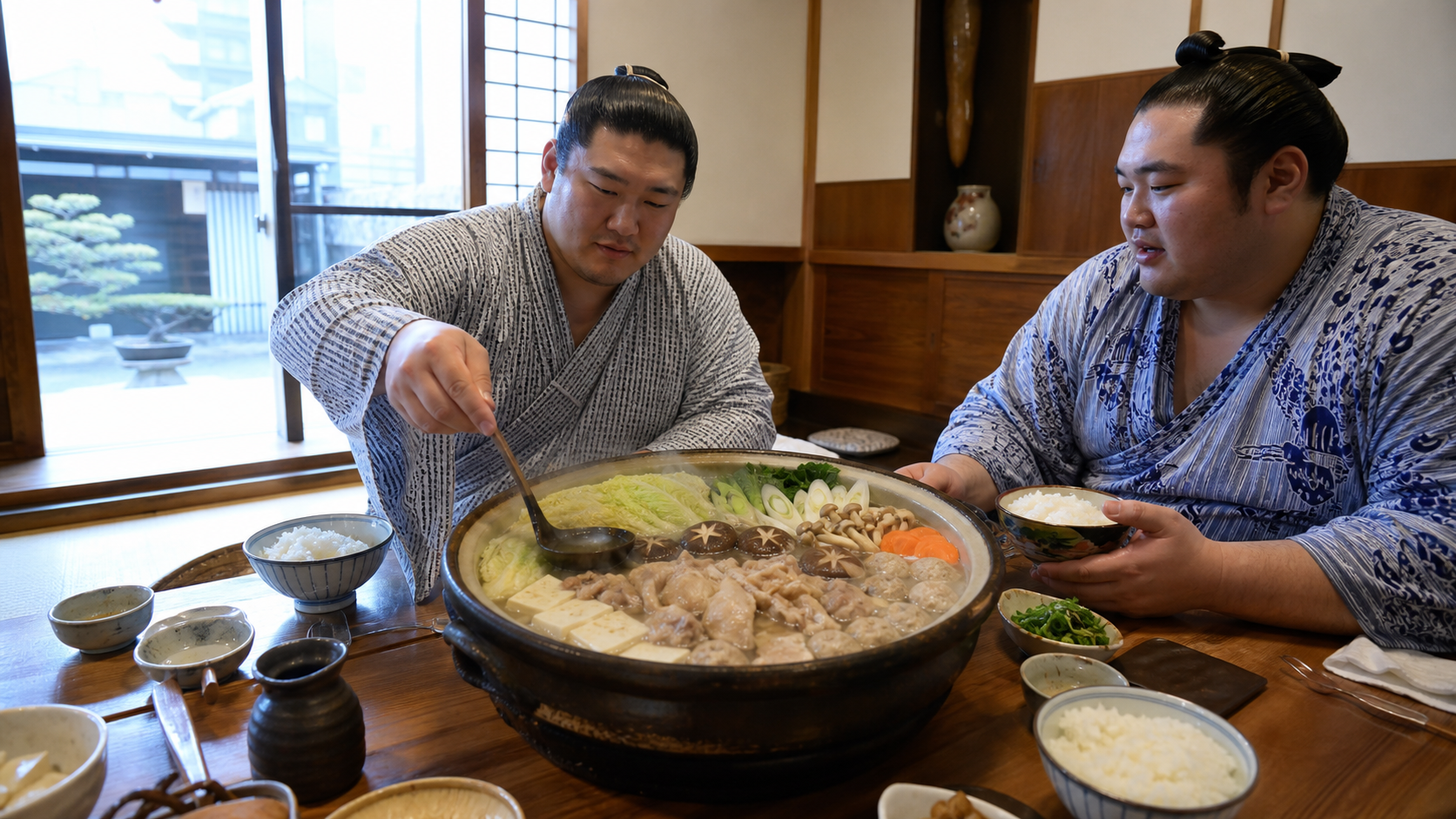
Information checked: August 26, 2026. Chanko nabe is often introduced as “the hot pot that makes sumo wrestlers big,” but that misses the culture. Chanko broadly means food prepared and eaten in a sumo stable; nabe is simply its best-known communal form. Wrestlers build their bodies through training, meal volume and routine—not through a magical ingredient.
Chanko is a stable meal, not one recipe
Junior wrestlers traditionally help cook for the stable community, making the kitchen part of collective training. Recipes pass between generations, and a retired wrestler may carry a stable’s flavor into a restaurant. Sharing one pot is practical for feeding many people, but it also expresses hierarchy, cooperation and belonging.
Some stables favor chicken before competition because a bird stands on two legs, while four-legged animals can symbolize touching the ground. This is a custom or story—not a universal ban: pork, beef, fish and seafood all appear in chanko.
What is inside chanko nabe?
| Element | Common examples |
|---|---|
| Broth | Salt, soy sauce, miso, chicken or seafood stock |
| Protein | Chicken, meatballs, pork, fish, seafood or tofu |
| Vegetables | Napa cabbage, leek, mushrooms, daikon and seasonal greens |
| Finish | Rice and egg for zosui, or noodles in the remaining broth |
Unlike sukiyaki, chanko has no single sweet soy formula and is not defined by thin slices of beef. Each stable and restaurant has its own balance.
How to choose and order
- Check whether the pot is sold per person or has a two-person minimum.
- Choose a broth and confirm the protein; photos alone may not show fish stock.
- Ask staff whether they cook at the table or want guests to manage the heat.
- Let raw meat and meatballs cook completely, then use the serving ladle.
- Order rice or noodles for the finish only when enough broth remains.
Lunch sets may suit solo visitors; dinner courses often require reservations, especially during Tokyo tournament periods. Prices, hours and closing days vary, so confirm the restaurant’s official listing.
Recommended half-day in Ryogoku
Start at JR Ryogoku Station, walk past Kokugikan-dori’s sumo monuments, visit the Sumo Museum if its calendar shows it open, then have chanko for lunch or an early dinner. Allow about three to four hours. Stable practice is private: book an authorized visit, follow photography rules and never enter a stable uninvited.
Sumo Museum practical information
| Address | 1F Ryogoku Kokugikan, 1-3-28 Yokoami, Sumida City, Tokyo 130-0015 |
|---|---|
| Access | 2 minutes from JR Sobu Line Ryogoku Station West Exit; 9 minutes from Toei Oedo Line Ryogoku Station Exit A3 |
| Hours | Normally 10:00–16:30, last entry 16:00; 12:30–16:00 on Tokyo tournament days |
| Admission | Free; a tournament ticket is required during a Tokyo Grand Sumo Tournament |
| Closed | Normally weekends, national holidays and year-end/New Year, with exceptions and exhibition-change closures |
There is no public parking and the arena itself is not included in a normal museum visit. Always check the official calendar before traveling.
Allergies, diets and table manners
Broth may contain chicken, fish, shellfish, soy or wheat; meat-free-looking vegetables can share the same stock and utensils. Vegetarian, vegan, halal and allergy-safe meals must be confirmed in advance. At the table, use serving utensils rather than personal chopsticks, avoid returning food to the pot, and wait until raw ingredients are fully cooked.
Frequently asked questions
Does chanko nabe automatically cause weight gain?
No. It can be a balanced pot of protein and vegetables; total quantity, rice, side dishes and an athlete’s full routine matter.
Can one person order it?
Sometimes. Look for a lunch set or single-person pot and verify minimum orders.
When is the best time?
Cold weather is atmospheric, but restaurants serve it year-round. Tournament days are livelier and busier, so reserve early.
Official references: Japan Sumo Association: Sumo Museum / GO TOKYO: Explore Ryogoku / GO TOKYO: local food