



Information checked: August 26, 2026. Akibare means fine, clear autumn weather, not a guaranteed period with one national temperature. Japan’s color moves differently by latitude, elevation, exposure, weather and tree species. Treat every “best date” as a planning clue, then verify the exact destination, access and current color before traveling.
“Peak color” is a stage, not an appointment
Mountain and northern areas often change before warmer lowlands, but local conditions can reverse a simple north-to-south rule. Higher slopes may be colored while the station remains green; an exposed ridge and sheltered garden can differ. Maples provide red and orange, ginkgo often turns yellow, and evergreen trees remain green. Mixed color is normal, not a failed visit.
Compare the current venue photo or official foliage update with the forecast, rather than relying on last year’s social-media date. Strong wind and rain can strip leaves quickly. Never claim that a future date will guarantee full color.
Choose one color gradient, not a ten-stop checklist
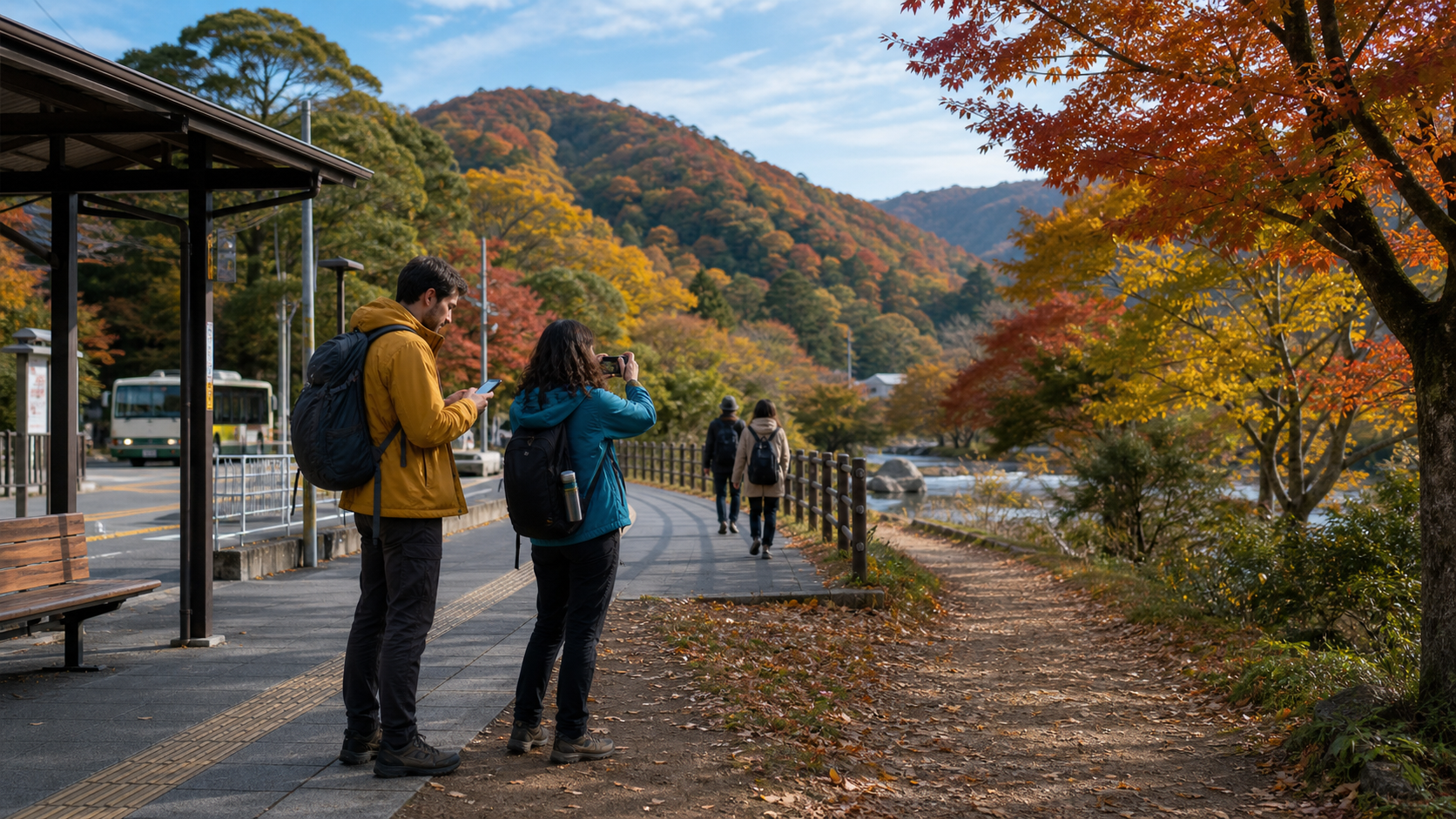
A useful half-day route begins at public transport, follows a maintained path through two or three landscape zones, includes a toilet and rest point, then returns before the last service. A riverside-to-foothill route may show lowland ginkgo, mixed maple woodland and more advanced color at moderate elevation without racing across a region.
Decide the maximum walking time and turnaround point before starting. Keep a lowland garden, local museum, craft center or covered shopping street as a weather backup. Do not publish “secret paths” through residential or private land.
Address, transport and closure checks for every named place
| Check | What to record |
|---|---|
| Location | Exact official Japanese name and address; distinguish similarly named parks and temples |
| Public transport | Staffed station, exit, bus stop, route number, direction, payment and return timetable |
| Admission | General fee, special autumn/night fee, reservation and cash/card conditions |
| Hours | Opening, last entry, closed day and temporary weather closure |
| Walking | Distance, elevation gain, surface, steps, lighting, toilets and step-free alternative |
A bus timetable in search results may be seasonal or outdated. Confirm the operator and date, download the return schedule and aim for an earlier bus than the last. Ropeways, boats and mountain roads can stop for wind or maintenance even under blue sky.
A clear morning can become cold, windy or wet
Check the Japan Meteorological Agency forecast for the exact municipality and, for hills, the venue’s higher-elevation conditions. Replace the old nationwide “15–25°C” claim with a layered system: breathable base, light mid-layer and packable wind/rain shell. Add a hat, water, sun protection and gloves when the local elevation and forecast warrant them.
Wear broken-in shoes with grip. Fallen leaves can hide wet stone, roots, drainage edges and ice. Autumn daylight shortens; a phone light is not a reason to start a trail late.
Stay on the path and preserve room for daily life
- Keep right or left according to local signs, and step fully aside only at a wide safe point.
- Do not enter roads for a photograph, climb barriers, cross planted areas or shake branches.
- Take fallen leaves only where the land manager explicitly permits it; in gardens and protected areas, leave natural material in place.
- Pack out litter and do not feed deer, monkeys or other wildlife.
- Keep voices low near homes, worship spaces and early-morning neighborhoods.
Wheelchair and stroller users should confirm gradient, surface, leaf clearance, curb cuts, accessible toilets, elevator hours and whether the “accessible route” remains open during autumn crowd control.
Momiji-gari means observing change, not collecting leaves
Momiji-gari, literally “autumn-leaf hunting,” describes going out to appreciate seasonal color. The pleasure lies in noticing transitions: maple red beside ginkgo yellow, moss and stone after rain, a temple roof framed by branches, or color descending a slope. It does not mean stripping foliage or treating a garden as a studio set.
Autumn illuminations are designed events rather than natural night access. Verify separate hours, fee, reservation, exit route and photography rules; daytime admission does not automatically include night entry.
A beautiful frame is not worth blocking a path
Photograph from the side of a wide official path and finish promptly. Ask permission for recognizable people, residents, craftspeople and shop interiors. Public access is not portrait consent. Avoid tripods, selfie sticks and drones where prohibited, and never use flash, lights or branches to disturb wildlife.
Do not stop a bus platform queue, tactile paving, shrine approach, bridge or narrow trail. Avoid publishing the exact location of fragile off-path vegetation. Natural editing should preserve realistic color; oversaturation creates false expectations.
Frequently asked questions
Is a sunny forecast enough for a mountain walk?
No. Check wind, precipitation, temperature, trail status, transport and daylight at the actual elevation.
Can I photograph temple and shrine foliage?
Only under that site’s rules. Some areas prohibit photography, video, flash, tripods or commercial shoots even when the grounds are open.
What if the leaves are still green?
Use the visit to notice tree species, garden structure and the green-to-yellow-to-red transition; or use the verified lower/higher-elevation backup without rushing.
Official resources: JNTO autumn guide / JMA local forecast / JNTO emergency planning