


Information checked: August 26, 2026. A Japanese midsummer trip is not made safer by simply carrying a fan. Heat, humidity, direct sun, hot pavement and long transfers combine. The practical answer is to change the route, pace and stopping rules before leaving the hotel.
Temperature alone does not describe the risk
Check the exact destination, not a national forecast. The Ministry of the Environment publishes WBGT, a heat-stress index that reflects factors beyond air temperature, plus Heatstroke Alert information. Also check the Japan Meteorological Agency forecast, warnings, rain and wind. Conditions differ between a shaded station district, an exposed castle ground, a humid valley and a mountain.
Do not treat a cloudy sky or lower morning temperature as permission to ignore risk. If an official alert is active, a venue restricts outdoor activity, or a traveler feels unwell, shorten, move or cancel the outdoor portion.
A cooler day starts with fewer commitments
| Time | Better use | Check |
|---|---|---|
| Early morning | Garden, shrine approach or neighborhood walk | Opening, shade, toilets, indoor refuge |
| Late morning–afternoon | Museum, aquarium, department store, arcade or long lunch | Admission, closed day, last entry, seats |
| Late afternoon | Recheck WBGT and symptoms | Sunset does not instantly cool pavement |
| Evening | One nearby activity and simple return | Last transport, fatigue, alcohol |
Choose one priority, one air-conditioned backup and one point at which you will stop. A famous site is not worth crossing a treeless district at midday merely because the itinerary says so.
Water, shade and cooling tools work as a system
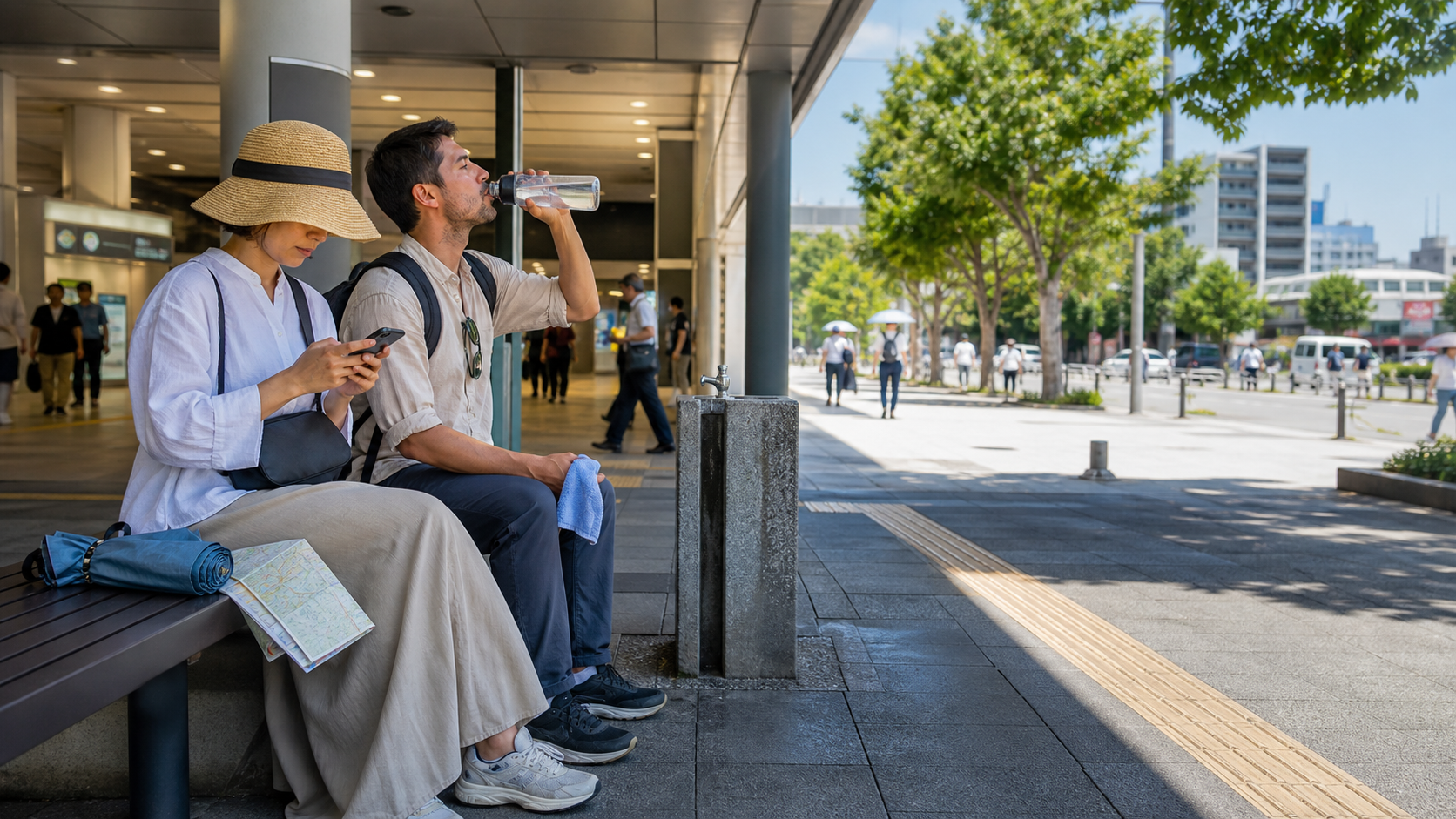
- Carry a clean refillable bottle and drink regularly instead of waiting for intense thirst.
- After prolonged heavy sweating, consider an appropriate electrolyte drink or oral rehydration product; people with fluid, salt or sugar restrictions should follow medical advice.
- Use a breathable hat or permitted parasol, sunscreen, small towel and light layer for strongly air-conditioned interiors.
- A cooling cloth or portable fan may improve comfort, but neither makes dangerous exposure safe.
- Keep medicine, emergency contacts and the hotel address accessible; follow medicine storage instructions.
A convenience store is a supply stop, not guaranteed recovery space
Railway buildings, museums, libraries, shopping facilities and restaurants can provide cooling, but confirm hours, admission, seats, toilets and re-entry. Convenience stores are useful for drinks, yet many have no seats or public toilet. Never block an entrance or sit on fixtures.
Record the exact station exit and elevator. “Five minutes from the station” may include an uncovered plaza, stairs or a long transfer corridor. Stop fully outside pedestrian flow and check every traveler before continuing.
Light clothing can still respect Japanese places
Choose loose, breathable, quick-drying clothes, broken-in shoes and sweat-managing socks. Pale colors may reduce solar heat absorption, but fabric, fit, shade and schedule matter more than color alone. At shrines and temples, modest coverage and site rules take priority. Do not open a parasol where it may strike people or objects.
Yukata is cultural summer dress, not technical heat protection. When renting one, ask about walking distance, footwear, return time and whether the route can be shortened.
Never make the most vulnerable traveler keep the group’s pace
Children, older adults, pregnant travelers, people with disabilities or chronic conditions, and anyone taking medicines that affect temperature regulation or hydration may need a different plan. Ask a clinician or pharmacist about personal precautions. A stroller canopy may trap heat, so check the child directly and prioritize indoor breaks.
Never leave a person or animal in a parked vehicle, even briefly.
Recognize symptoms and act before continuing
Dizziness, headache, nausea, unusual fatigue, cramps, heavy sweating or an abnormal lack of sweating can signal heat illness. Stop activity, move to a cool place, loosen excess clothing and cool the neck, armpits and groin. Give cool fluids only when the person is fully alert and can swallow safely.
Call 119 immediately for confusion, collapse, seizure, severe or worsening symptoms, or inability to drink. Never force fluids into a confused or unconscious person. Follow emergency operators and local staff.
Frequently asked questions
Is tap water safe?
Japanese tap water is generally potable, but never use a faucet marked non-potable. Refill only where permitted.
Should I copy a fixed drinking interval?
No single schedule fits every body and activity. Drink regularly and follow medical advice if you have fluid restrictions.
Can station lockers protect heat-sensitive items?
No. Lockers are not refrigerated; follow the product’s storage requirements.
Official resources: Ministry of the Environment / JMA heat information / FDMA first aid / JNTO emergency planning