


Information checked: August 26, 2026. Japan’s brewing culture is more than a tasting opportunity. Sake breweries reveal how polished rice, koji mold, yeast and regional water become nihonshu; shochu distilleries show a very different process using ingredients such as sweet potato, barley or rice; craft breweries interpret local food and landscapes through beer. Tours range from self-guided museums to working production sites, so reservation, hygiene and photography rules must be checked individually.
Three drinks, three production methods
| Drink | How it is made | Regions often associated with it |
|---|---|---|
| Nihonshu (sake) | Rice is polished, steamed and fermented with koji and yeast; starch conversion and fermentation proceed in parallel | Nada in Kobe, Fushimi in Kyoto, Niigata and many other rice-growing areas |
| Shochu | A distilled spirit made from a fermented mash, commonly using sweet potato, barley, rice or brown sugar | Kagoshima, Miyazaki, Kumamoto and Oita |
| Craft beer | Malted grain is mashed, boiled with hops and fermented | Breweries exist nationwide rather than in one traditional heartland |
These categories should not be presented as interchangeable “brewing towns.” Shochu involves distillation, while sake and beer are fermented beverages. Every producer also sets its own tour schedule; many production areas are not open visitor attractions.
Why Nada became a sake district
Nada Gogo—five historical brewing districts in and around Kobe and Nishinomiya—benefited from mineral-rich Miyamizu water, winter winds suited to brewing, skilled Tamba toji brewers and access to ports for shipping sake to Edo. A museum visit therefore connects rice agriculture, fermentation science, seasonal labor and merchant history rather than simply promoting a brand.
What to check before a brewery visit
- Is it a museum, a guided tour or an active production floor?
- Is advance booking required, and are children admitted?
- Are explanations available in your language?
- Are tasting, soft drinks and shopping separate from admission?
- Can visitors enter after eating fermented foods such as natto? Working breweries may restrict this because microorganisms can affect production.
- Are bags, perfume, open shoes or photography restricted?
Never assume a listing promising a “free tour” is current. Check the producer’s own website on the day of travel.
Hakutsuru Sake Brewery Museum: address, access and admission
| Address | 4-5-5 Sumiyoshiminami-machi, Higashinada-ku, Kobe 658-0041 |
|---|---|
| Access | About 5 minutes on foot from Hanshin Sumiyoshi Station; about 15 minutes from JR Sumiyoshi Station |
| Hours | 9:30–16:30; last admission 16:00 |
| Closed | Obon summer closure, year-end/New Year and temporary maintenance days. In 2026, the announced summer closure was August 5–18 and year-end closure December 28–January 4, 2027 |
| Admission | Free for the self-guided museum |
| Reservation | No reservation for fewer than 10 people; groups of 10 or more must reserve |
| Typical time | About 60 minutes |
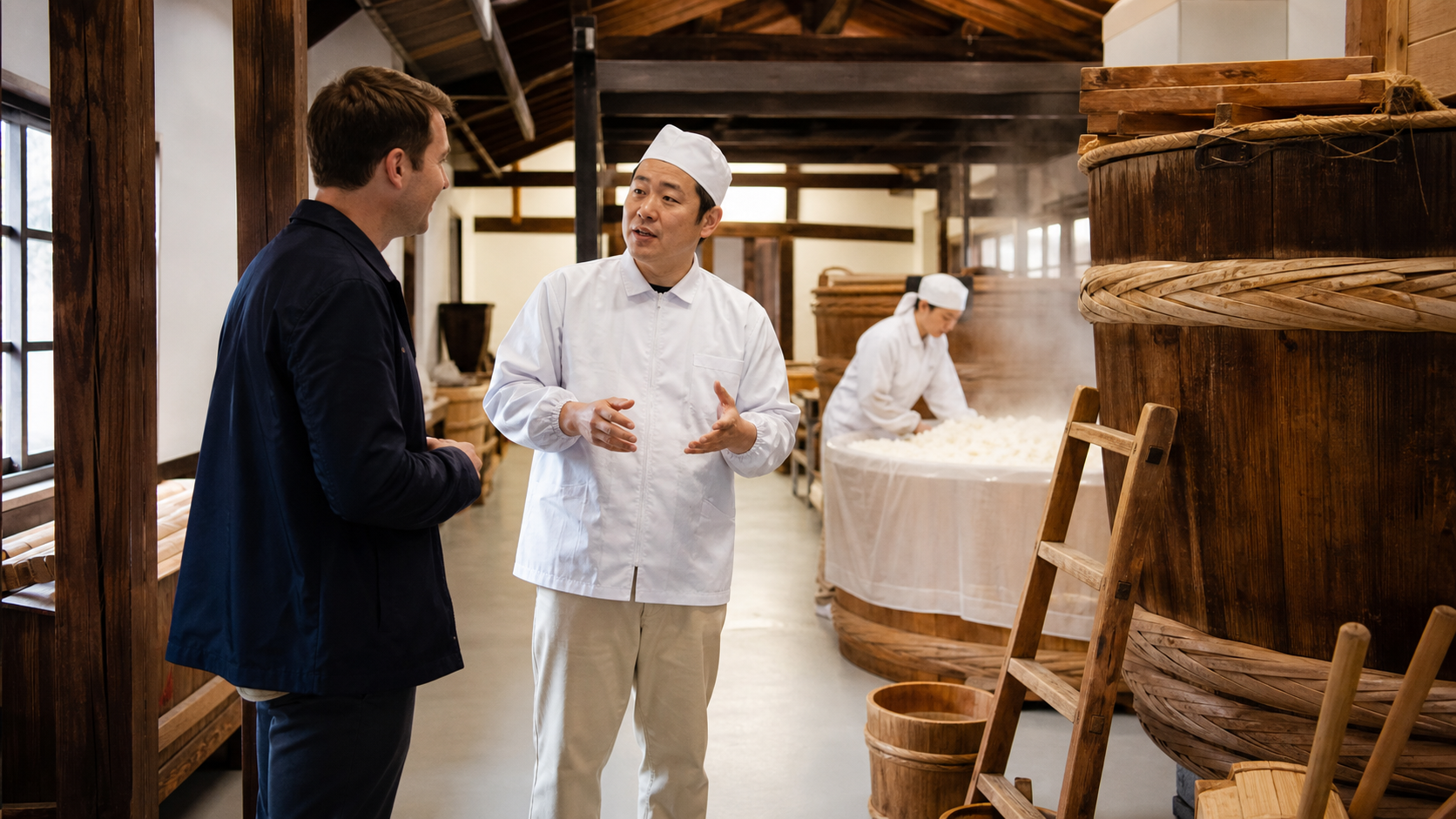
The converted Taisho-era brewhouse displays cedar vats, tools and videos explaining traditional production. English exhibit explanations and multilingual pamphlets are available, but a live foreign-language guide is not guaranteed. Tasting availability and prices can change; the museum remains worthwhile without drinking.
A responsible half-day in Nada
- Confirm the museum’s same-day closure notice and arrive by train.
- Follow the exhibit from rice preparation and koji through fermentation and pressing.
- Spend time on tools and worker roles before visiting the shop or tasting corner.
- Drink water and eat lunch nearby; do not rush between multiple tasting counters.
- If visiting another Nada museum, check walking distance, final entry and its separate rules first.
Age, driving and brewery etiquette
- Alcohol consumption is prohibited in Japan for anyone under 20. Turning 18 does not change this rule.
- Never drive, cycle or operate a vehicle after drinking. Use the Hanshin or JR line.
- Non-drinkers, pregnant visitors and children can focus on exhibits; decline tasting without embarrassment.
- Do not touch brewing tools, cross barriers or enter production rooms not included in the route.
- Ask before photographing staff and obey no-photo signs.
- Avoid strong fragrance and follow hygiene instructions; a brewery is a food-production site.
Frequently asked questions
Is “sake” the same as nihonshu?
In English, sake usually means Japanese rice wine. In Japanese, sake can mean alcohol generally, while nihonshu identifies the rice-based drink.
Can I visit without tasting?
Yes. Hakutsuru’s historical building, tools and production displays are the core experience, and admission is free.
Can I buy bottles for an international flight?
Yes, subject to airline baggage, security, customs and destination-country alcohol allowances. Do not rely only on a shop’s tax-free status.
Official references: Hakutsuru museum / METI Kansai visit guide / National Tax Agency drinking-age notice