


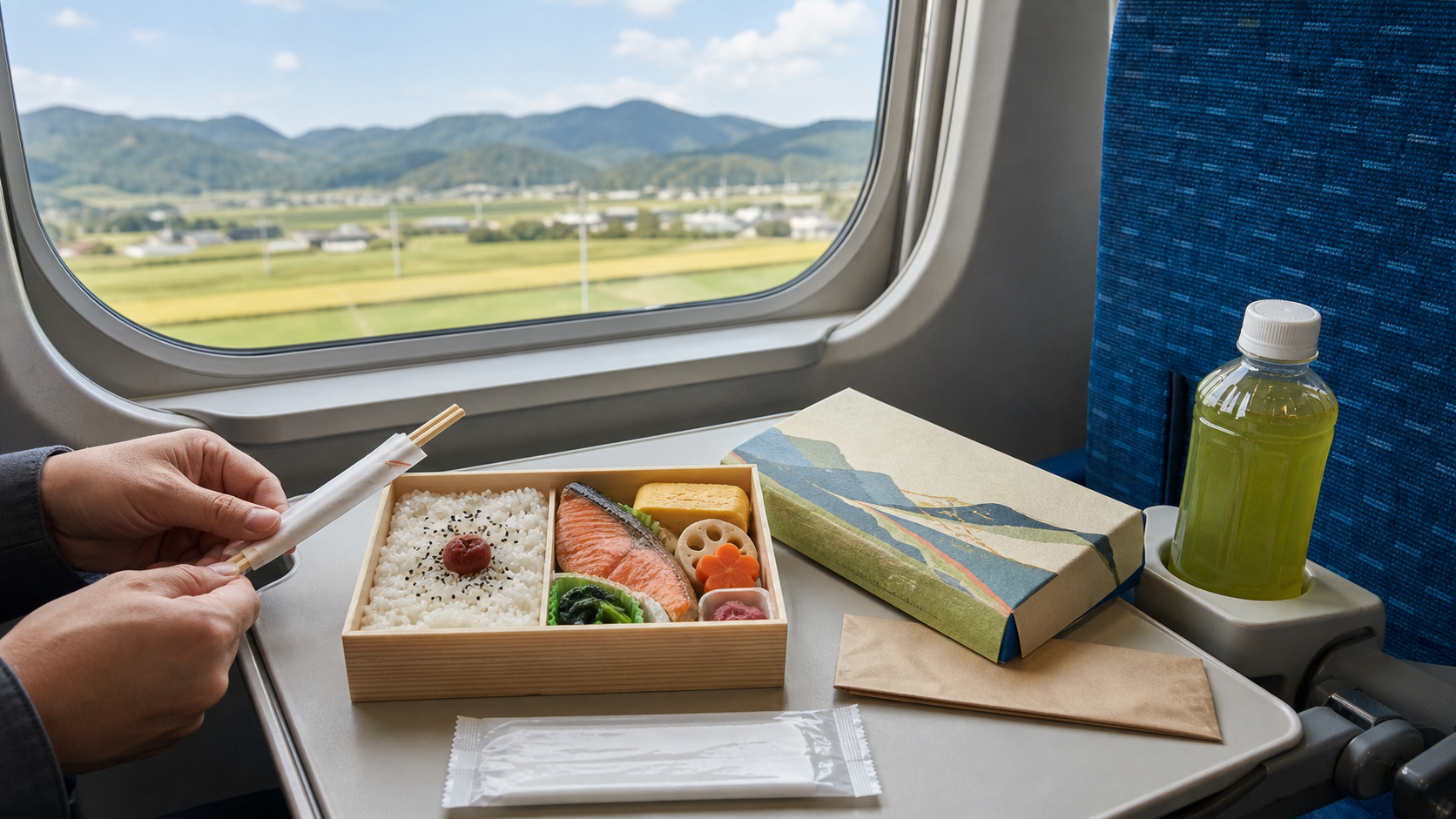
Information checked: August 26, 2026. An ekiben is more than any boxed meal eaten near a station. The name combines eki (station) and bento, and the best examples turn a rail route’s ingredients, preservation methods and packaging into a portable portrait of place. This guide helps you find one without missing your train, decide whether eating onboard is appropriate and handle labels, heat and waste safely.
Railways turned local food into a portable story
As Japan’s railway network expanded, long journeys created demand for meals that could be sold at stations and eaten in a carriage. Makers adapted rice, preserved fish, simmered vegetables, meat and local crafts to travel. Packaging became part map, souvenir and advertisement, while the meal connected passengers with landscapes outside the window.
Not every ingredient is grown beside the railway, and not every station bento is an old tradition. Authenticity can also mean a modern maker explaining its sourcing and adapting a local dish responsibly. Toyama’s masu-zushi, for example, existed as regional pressed trout sushi before railway sales helped make it nationally known.
Choose by format, journey and appetite
| Style | What to expect | Practical check |
|---|---|---|
| Makunouchi | Rice with several grilled, simmered, egg and vegetable items | Good variety; many hidden allergens |
| Meat bento | Beef, pork or chicken over rice or in compartments | Fat when cold, sauce, heating instructions |
| Seafood / pressed sushi | Cooked seafood, roe, crab or vinegared pressed fish and rice | Raw/cooked status, temperature, shellfish and fish |
| Local rice / vegetable bento | Regional rice, mushrooms, mountain vegetables, pickles | Stock may still contain fish or meat |
| Character / vessel package | Train-shaped, ceramic or reusable-looking container | Weight, disposal, whether container is actually reusable |
| Self-heating bento | String or mechanism activates a heat pack beneath the food | Follow the exact wait time; keep level and beware of steam |
A regular-size house product often explains the region better than the most expensive wagyu box. Compare the ingredient photo, net weight, rice amount and whether chopsticks are included.
Map the shop before the ticket gate and buy with time to spare
Large hubs may have ekiben specialty zones, platform kiosks, department-store counters and shops both outside and inside the paid area. Small stations may have one cabinet, limited hours or no ekiben. Save the exact floor, gate side and opening time; “at Tokyo Station” is not enough when a transfer takes 15 minutes.
- Choose the train and seat first, then check whether food is suitable onboard.
- Find a shop on your actual walking route and keep a backup shop/product.
- Allow 20–30 minutes at a large unfamiliar station, more during holidays.
- Read the consumption deadline before paying; do not buy a short-life seafood box for dinner many hours later.
- Collect chopsticks, wet towel, bag and receipt, then secure the box flat.
Popular and seasonal products can sell out; a photograph online is not a stock promise. Do not depend on onboard sales. JR Central states that food and drink sales are unavailable in Standard Class on the Tokaido Shinkansen, so buy before boarding unless your exact service confirms otherwise.
The consumption deadline and storage instruction outrank your itinerary
Look for shōhi kigen (消費期限: do not eat after this safety deadline), storage temperature, manufacturer and allergen panel. The deadline assumes the package is unopened and stored as instructed. Eat soon after opening. Shorten carrying time; in hot or humid weather, use a cool bag and ice pack when the label permits, but do not refrigerate a product if its maker gives a different specific instruction.
Common concerns include wheat and soy in soy sauce, egg in tamagoyaki and coatings, milk, sesame, peanuts/tree nuts, fish, roe, crab, shrimp, molluscs and shared production lines. A vegetable-looking box can use bonito or meat stock; removing one compartment does not make the rest vegan, halal or allergy-safe. For severe allergy, confirm before purchase and choose clearly documented products.
Eat on long-distance trains, not crowded commuter services
JNTO and railway guidance generally allow food on Shinkansen and long-distance limited-express trains, where forward-facing seats and tray tables support meals. Local commuter trains and subways are not normally appropriate for a boxed meal: they are crowded, stop frequently and lack safe table space. Sightseeing and reserved local trains vary, so check the operator.
Wait until seated. Do not open a box on the platform edge, while boarding, in a station queue or on a standing train. If your seat faces other passengers after rotation, consider smell and ask companions before opening strong seafood or self-heating food. Keep the aisle, adjacent seat and luggage space clear.
Keep the meal within your tray and take responsibility for waste
- Wash or sanitise hands, then wipe the tray if needed.
- Place the box fully on the tray; keep hot drinks and bottles in holders.
- Open sauces away from clothing and neighbouring seats. Do not shake the train-shaped table.
- For self-heating boxes, follow the printed order and wait time, keep the unit level and never place it on your lap. Steam and the base can become hot.
- Speak quietly, avoid calls and do not photograph identifiable strangers.
- After eating, close the lid, contain sauce and skewers, fold wrappers and put everything in a bag.
Use only a clearly appropriate station or onboard bin, following its sorting labels. If uncertain or bins are unavailable, carry waste away. Seat pockets are not rubbish bins, and staff should not have to handle leaking containers.
Budget, seat and mobility checks
| Purchase | Planning range |
|---|---|
| Simple rice / makunouchi bento | Often about ¥800–¥1,400 |
| Regional standard ekiben | Often about ¥1,000–¥1,800 |
| Premium seafood, wagyu or special container | Often about ¥1,500–¥3,000+ |
| Tea, cool bag or extra side | Add about ¥150–¥800 |
These are planning ranges, not product quotes. Confirm tax, payment and current stock. JNTO notes examples from under ¥1,000 to around ¥3,000, but price does not prove local sourcing or quality.
For mobility needs, map elevators and wide gates to the shop and platform, allow time for station assistance, and confirm whether your wheelchair or companion seat has a usable table. A large box may not fit a small tray. Store luggage before opening food; never balance a bento on a suitcase in the aisle. Families should seat children before serving and keep heating units, skewers and hot tea out of reach.
A 45-minute pre-departure plan and FAQ
| Time | Action |
|---|---|
| T−45 | Arrive, confirm platform and delays |
| T−35 | Go to the mapped shop; check deadline and allergens |
| T−25 | Pay, collect utensils, secure box flat and use toilet |
| T−15 | Pass gates / reach platform without opening food |
| After departure | Wait until seated and service is stable, then open on tray |
Can I reserve an ekiben?
Some makers and station shops accept advance or same-day reservations; many do not. A train seat reservation never reserves food.
Can I microwave it?
Do not assume a station or train has a microwave. Most are designed to be eaten as sold; heat only when the package explicitly provides a safe method.
Can I keep the container?
Yes if it is sold as part of the product and clean enough to carry, but remove food residue and check its material. Do not take display ware.
May I eat before departure?
Once seated on an appropriate long-distance train, usually yes, but waiting until movement stabilises reduces spills and leaves space for boarding.
What if the train is cancelled?
Follow the label, not the replacement schedule. Eat in an allowed waiting area before the deadline or discard safely; a delayed journey does not extend food safety.
Official references: JNTO: local ekiben culture / JNTO: eating on different trains / JR Central: Shinkansen food and onboard sales / MAFF: Toyama masu-zushi / MAFF: takeaway food safety / Consumer Affairs Agency: expiration labels