



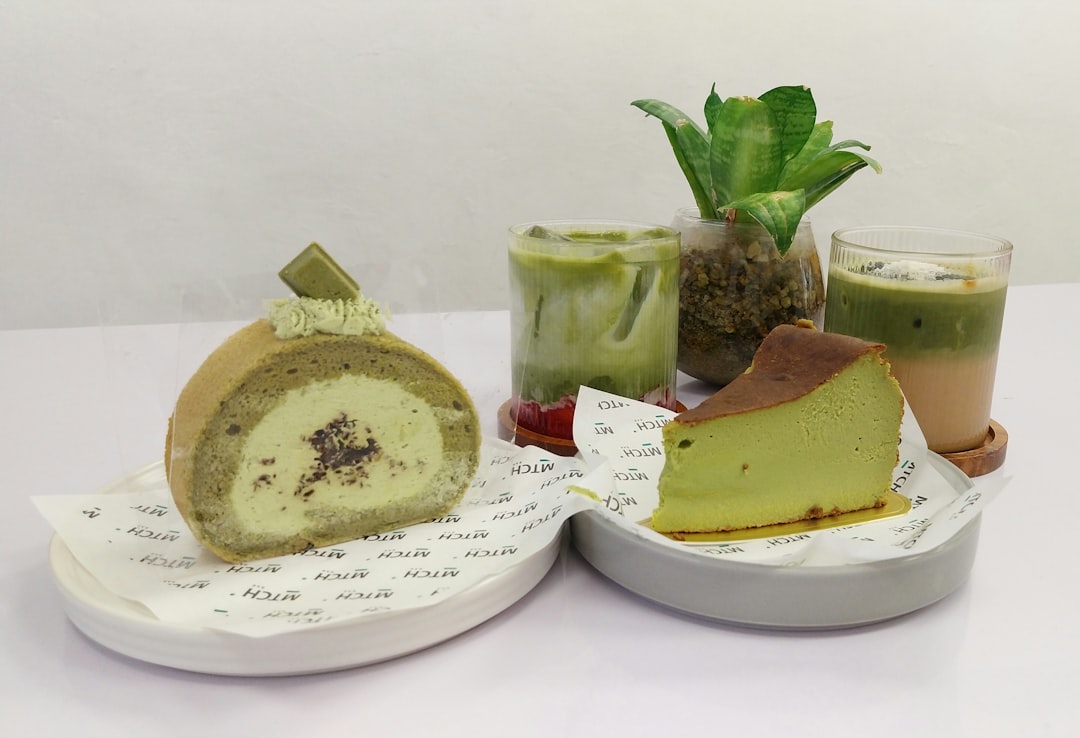
Information checked: August 26, 2026. Matcha is not simply any green tea ground into powder. It is made by grinding tencha: shaded leaves that are steamed, dried without rolling and refined. In sweets, however, the final flavor also depends on sugar, milk, fat, temperature and how much tea is used. Bright green color alone cannot prove origin or quality.
From shaded tencha to powdered tea
MAFF explains that tea leaves for tencha are grown under cover, steamed and dried without rolling; stems and veins are removed before the leaf is ground. This differs from sencha, whose leaves are rolled, and from products that merely use powdered sencha. Matcha became closely connected to chanoyu, but today’s café desserts are modern food culture rather than abbreviated tea ceremonies.
What you are actually ordering
| Item | What to expect |
|---|---|
| Usucha | Whisked matcha and water; the clearest way to taste aroma, umami, bitterness and astringency |
| Matcha latte | Tea with milk or plant drink; sweetness may be preset, so ask before adding syrup |
| Soft serve / ice cream | Cold and dairy soften bitterness; color and intensity vary |
| Parfait | May combine ice cream, jelly, bean paste, mochi, cereal and cream; large and allergen-dense |
| Cake / tiramisu | Matcha balances cream, cheese or chocolate; not a traditional wagashi by default |
| Wagashi with matcha | The sweet may be served beside plain whisked tea rather than containing matcha itself |
Taste beyond “strong” and “bitter”
- Smell before adding milk or syrup.
- Notice umami and sweetness first, then bitterness and astringency in the finish.
- Compare plain tea with one sweet instead of ordering several intensely flavored items.
- Ask whether the product uses matcha, powdered green tea or a blended tea ingredient if origin matters to you.
- Do not equate fluorescent color with premium grade; food coloring and photography can mislead.
“Ceremonial grade” is not a single Japanese statutory quality grade. Producer, harvest, cultivar, processing and intended use are more informative when disclosed.
Convenience store, café or tea specialist?
| Packaged retail sweet | Easy labels and takeout, but flavor is designed for shelf life and broad appeal. |
|---|---|
| General café | Accessible lattes and cakes; verify whether drinks are pre-sweetened. |
| Tea specialist | Better chance to compare origins, usucha and seasonal wagashi; queues and last orders vary. |
| Tea experience | Whisking and utensil context; confirm whether it is a casual workshop or formal tea practice. |
Check the current menu, tax-inclusive price, business hours, last order and reservation rules on the individual venue’s official page.
A practical matcha stop in Uji
Uji is a historic tea center, not the sole “birthplace of matcha.” Kyoto Prefecture records tea cultivation developing there after tea seeds reached the Kyoto region, while Uji production refined covered cultivation and tea culture over centuries. Reach central Uji via JR Nara Line to JR Uji Station or the Keihan Uji Line to Keihan Uji Station; the stations are separate, so map your return route.
For a half-day, visit one tea shop for plain matcha and a seasonal sweet, walk the river area, then choose one dessert rather than queueing repeatedly. Shops have different closing days and may stop café service before retail sales; verify the official listing. Avoid photographing tea preparation or private interiors without permission.
Caffeine, sugar and allergens
Matcha contains caffeine because the whole powdered leaf is consumed. The Consumer Affairs Agency notes that sensitivity differs and children, pregnant or breastfeeding people and caffeine-sensitive visitors should be especially careful. Product caffeine amounts vary, so avoid presenting one universal number. Matcha desserts can also be high in sugar or fat and are not automatically health foods.
Milk, egg, wheat, soy, sesame, nuts and gelatin are common. A green product is not automatically vegan, halal or gluten-free. Ask about shared mixers, scoops and display cases if cross-contact matters.
Frequently asked questions
Is every green tea powder matcha?
No. True matcha is ground tencha; powdered sencha and blended green tea ingredients also exist.
Is Uji the birthplace of matcha?
That is too simple. Tea and powdered-tea practices reached Japan from China; Uji became one of Japan’s most important areas for refining cultivation, production and tea culture.
Can I buy matcha as a souvenir?
Yes. Check sealing, best-before date, storage instructions and origin. After opening, protect it from heat, light, moisture and odors.
Official references: MAFF: Uji tea and matcha production / Kyoto Prefecture: history of Uji tea / Consumer Affairs Agency: caffeine