



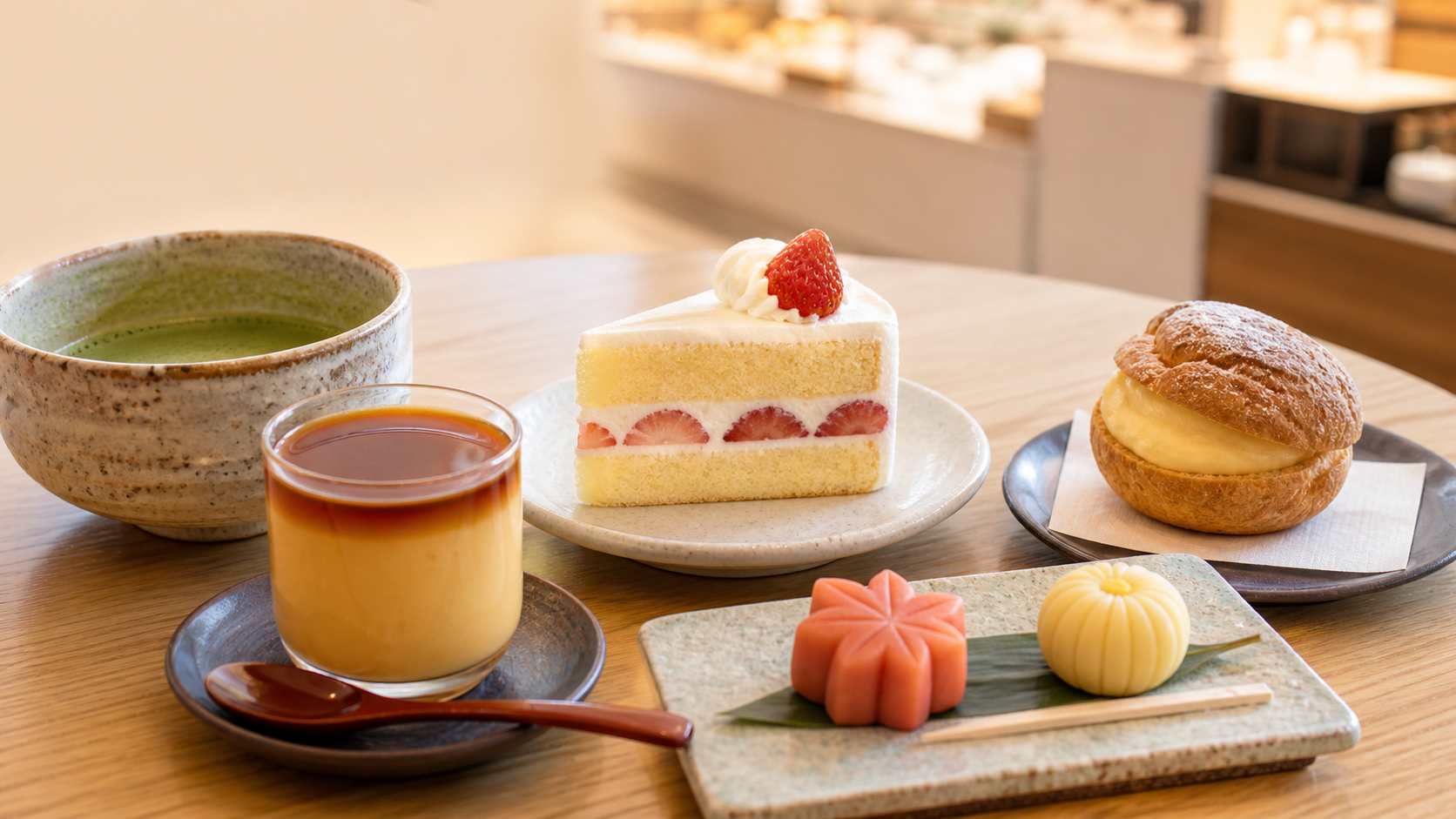
Information checked: August 26, 2026. Japan’s sweets scene is not one ladder from “cheap convenience store” to “superior patisserie.” It includes seasonal wagashi, everyday packaged desserts, regional gifts, department-store counters and Japanese interpretations of European pastry. Nor are all Japanese desserts “less sweet than Western ones”: sweetness, fat, texture and portion vary by product.
Four different sweet experiences
| Convenience store / supermarket | Pudding, cream puffs, roll cake, jelly and seasonal products with clear packaged-food labels. Stock and prices change frequently. |
|---|---|
| Wagashi shop | Bean paste, mochi, rice flour, agar and seasonal designs; fresh items may have a very short life. |
| Depachika | A department-store basement food hall gathering regional gifts, wagashi, chocolate and pastry counters, often near major stations. |
| Patisserie / café | Fresh cakes and plated desserts influenced by French and other European techniques, interpreted through Japanese ingredients and seasons. |
Reading the season through wagashi
MAFF classifies wagashi by method and moisture, including mochi sweets, steamed manju, baked dorayaki, molded yokan, shaped nerikiri and dry higashi. Their colors, names and motifs may suggest blossoms, flowing water, autumn leaves or winter flowers. This is not decoration alone: sweets connect tea, hospitality, festivals and local ingredients.
| Type | Texture / travel suitability |
|---|---|
| Namagashi / nerikiri | Moist and delicate; eat soon and protect from heat |
| Daifuku | Soft mochi with filling; check same-day guidance and refrigeration |
| Yokan | Dense bean-and-agar sweet; sealed versions often travel better |
| Monaka | Crisp wafers with bean paste; fragile and sensitive to humidity |
| Higashi | Dry molded sweet; generally easier to carry, but still check the date |
A practical tasting strategy
- Choose one fresh item to eat locally and one shelf-stable item if you need a gift.
- Compare ingredients and portion rather than assuming “Japanese” means low sugar or healthy.
- Look for a seasonal motif or regional ingredient and ask what it represents.
- At a patisserie, photograph the display number or point politely; staff may pack cakes with ice packs.
- Buy chilled desserts near the end of your outing, not before hours of sightseeing.
Limited-edition does not automatically mean traditional or better. It often means a short sales period or collaboration; select by taste and logistics.
Allergens, diets and the cold chain
Milk, egg, wheat and soy are common in Western-style sweets; nuts, sesame and gelatin also appear. Wagashi may contain soy, wheat, sesame or nuts, and mochi presents a choking risk, especially for young children and older adults. Packaged foods carry ingredient and allergen information under Japanese rules, but an unpackaged counter item may require asking staff. “Matcha” does not imply vegan, and agar-based appearance does not rule out dairy elsewhere in the recipe.
- 要冷蔵: refrigeration required.
- 消費期限: use-by period; prioritize safety.
- 賞味期限: best-before quality guidance for an unopened product stored as directed.
Ice packs are temporary. Ask how long they are intended to last and return the product to refrigeration promptly.
How to use a depachika
JNTO describes depachika as department-store basement food halls with prepared foods and sweets, commonly linked to stations. Visit outside the lunch and early-evening peaks for easier browsing. Follow the queue for each counter, do not touch display items, and accept samples only when offered. Most products are takeout: the food floor itself may not have a place to eat. Ask for jitan-yō (for yourself) or okurimono-yō (as a gift) so staff can suggest suitable packaging.
Ordering, photographs and gifts
Confirm dine-in or takeout because tax treatment and packaging may differ. In a café, one order per seated guest may be expected; check the menu rather than occupying a table with only a shared dessert. Ask before photographing a counter or kitchen. For a gift, tell staff when you will present it and whether it must travel unrefrigerated. Decorative wrapping is useful, but avoid requesting excessive layers for an item you will eat immediately.
Frequently asked questions
Are Japanese sweets always mildly sweet?
No. Bean paste, yokan, castella, caramel and chocolate can be very sweet; balance and portion differ.
Can wagashi be vegan or gluten-free?
Some recipes may qualify, but ingredients, flour dusting and shared equipment vary. Verify the exact product.
Can I take sweets overseas?
Check the destination’s import rules for dairy, egg, fresh fruit, meat-derived gelatin and plant materials. A shop’s gift packaging is not customs clearance.
Official references: MAFF: Japanese sweets / JNTO: depachika guide / Consumer Affairs Agency: allergy labeling