



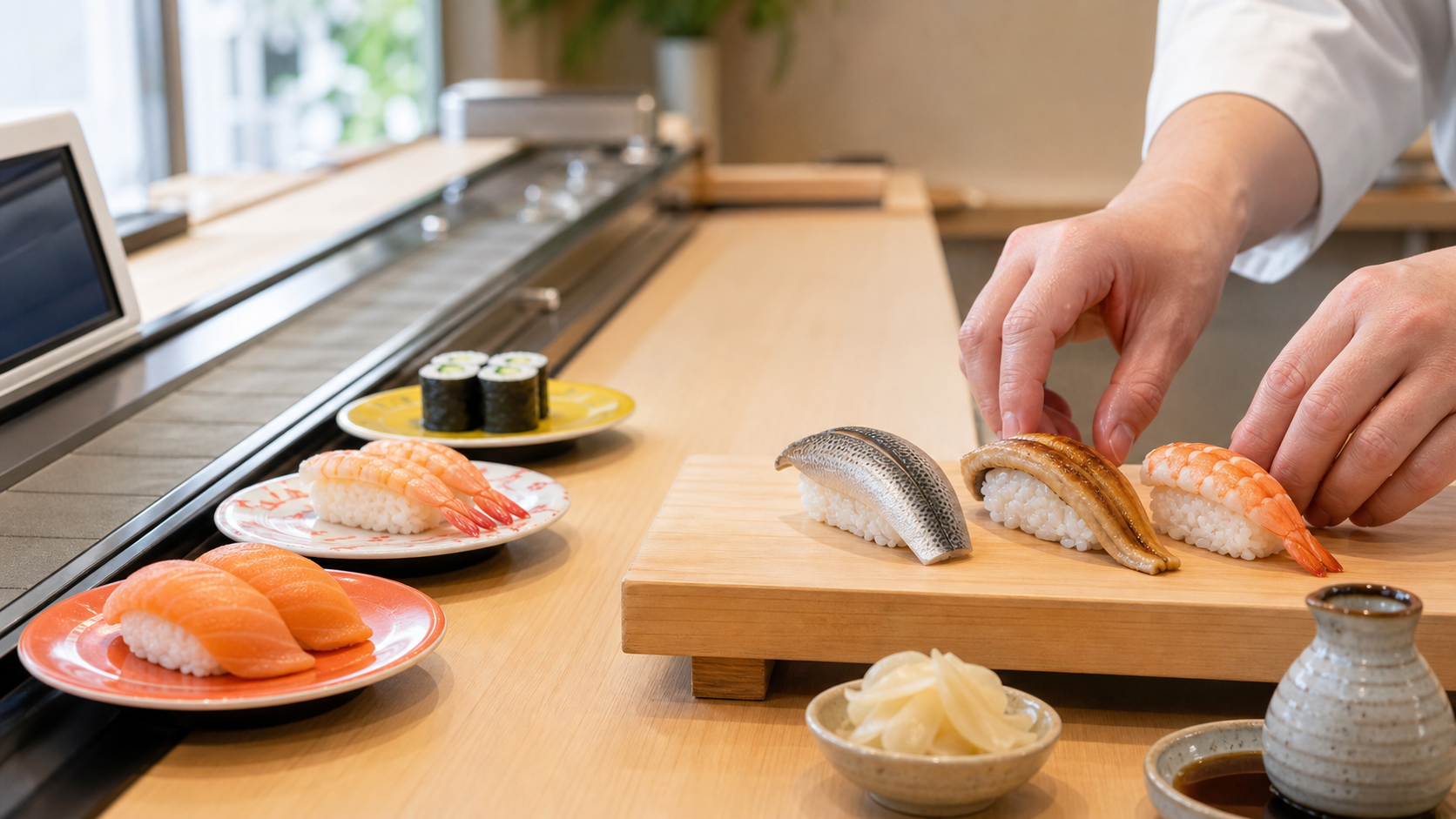
Information checked: August 26, 2026. Japan offers sushi at supermarkets, conveyor-belt restaurants, neighbourhood counters and reservation-only omakase rooms. They are not steps on one simple ladder from “cheap” to “authentic.” Each solves a different need. This guide explains what you are buying, how Edomae technique goes beyond raw fish, and how to order without anxiety or accidental overspending.
Sushi is vinegared rice, not a synonym for raw fish
The defining element is seasoned rice (shari). Nigiri places a topping over hand-shaped rice; maki is rolled; gunkan uses a nori wall for loose toppings; chirashi scatters toppings over rice; pressed and fermented forms preserve regional histories. Sashimi is sliced seafood without rice and therefore is not sushi.
| まぐろ / maguro | Tuna; lean akami differs from fatty chūtoro and ōtoro |
|---|---|
| 白身 / shiromi | White-fleshed fish; species and season vary |
| 光り物 / hikarimono | Silver-skinned fish such as kohada or mackerel, often vinegar-cured |
| 穴子 / anago | Conger eel, commonly simmered and served with sauce |
| 玉子 / tamago | Cooked omelette; recipes may contain fish stock, shrimp paste or dairy |
Choose the format that fits your trip
| Format | Best for | Check first |
|---|---|---|
| Supermarket / depachika | Takeaway, fixed labels and a quick meal | Use-by time, refrigeration and an appropriate place to eat |
| Kaitenzushi | Visual ordering, families, flexible quantity | Plate-price colours, tablet language, queue ticket and final bill process |
| Neighbourhood sushi shop | Local atmosphere and à-la-carte conversation | Visible prices, smoking policy, language and minimum order |
| Set-course counter | A paced meal with known course contents | Course price, drinks, service charge, duration and substitutions |
| Omakase | Trusting the chef’s seasonal sequence | Total price range, cancellation policy, arrival time and dietary limits before booking |
“Omakase” means leaving selection to the chef; it does not guarantee luxury, a Michelin listing, unlimited pieces or accommodation of every restriction.
Edomae sushi is technique, not just geography
In Edo-period Tokyo, stall foods developed around seafood from the waters before Edo. Without modern refrigeration, cooks improved flavour and keeping quality by salting, vinegar-curing, simmering, steaming, marinating in soy sauce and wrapping with kombu. MAFF identifies red-vinegar rice, vinegar-cured kohada and mackerel, boiled conger eel, steamed prawn and omelette among the continuing Edomae repertoire.
Today “Edomae” can refer to that culinary tradition even when an ingredient was not caught in Tokyo Bay. A carefully cured fish may be more characteristic than an untouched raw slice. Rice temperature, vinegar, compression, knife work and the timing between chef and guest matter as much as species prestige.
Prevent price and reservation surprises
- Check whether the displayed amount is per piece, per pair, per plate or per course.
- Ask whether tax, service charge, seating charge and required drinks are included.
- For omakase, give allergies and foods you cannot eat before the restaurant accepts the booking.
- Read cancellation and no-show charges; high-end counters buy and prepare ingredients for the reserved guest.
- Confirm start time, meal duration, late-arrival policy, children, fragrance rules and photography.
- Use a working phone number and do not book several restaurants for the same meal.
At an unpriced traditional counter, ask for an approximate budget before sitting. This is practical communication, not an insult. Prices and seasonal availability change, so old blogs are not a quotation.
How conveyor-belt sushi works
- Take a queue ticket and enter only when your number or name is called.
- Check the plate-colour chart; different colours can mean different prices.
- Take a plate only when you intend to keep it. Never return food to the belt.
- Use the tablet or order lane for made-to-order items and collect only the order marked for your seat.
- Stack plates as instructed; the staff or scanning system uses them for billing.
- Tea, water, ginger and condiments may be self-service. Do not touch shared items with used chopsticks.
Some modern restaurants send nearly all orders directly rather than circulating food. Do not assume every passing container is sushi or that every plate has the same price.
Counter sushi etiquette without theatre
Hands or chopsticks are both acceptable for nigiri. If soy sauce is needed, lightly touch the topping rather than soaking the rice; some pieces arrive already seasoned and need none. Pickled ginger (gari) refreshes the palate between pieces and is not a pile-on topping. Eat a freshly placed piece reasonably soon so the chef’s temperature and texture balance is preserved.
- Avoid strong perfume because aroma is part of the meal.
- Ask before filming the chef, other guests or an entire course.
- Keep the counter clear of bags, phones and used tissues.
- Tell the chef early if the rice portion is too large; do not silently leave every mound.
- Tipping is not customary. A clear thank-you is appropriate.
Do not police other diners with invented rules. The restaurant’s instructions take priority, and casual kaitenzushi is intentionally more relaxed than a small formal counter.
Raw-fish safety, pregnancy and allergens
Raw or undercooked seafood carries risks including parasites and bacteria. The Ministry of Health, Labour and Welfare notes that Anisakis can cause acute abdominal symptoms; vinegar, salt, soy sauce and wasabi do not reliably kill it. Use reputable businesses with controlled sourcing and temperature, and seek medical care for severe pain or allergic symptoms after eating.
Pregnant people, young children, older adults and immunocompromised travellers should follow medical advice about raw seafood and high-mercury fish. Cooked choices can include boiled shrimp, anago and omelette, but cross-contact remains possible.
Common allergens include fish, shellfish, egg, soy and wheat in soy sauce; sesame, milk and nuts may occur in modern rolls or desserts. “Vegetable sushi” may contain fish stock, shared knives or animal-derived seasoning. For serious allergies, use the Consumer Affairs Agency communication sheet and do not rely only on a multilingual tablet icon.
Frequently asked questions
Must sushi be eaten in one bite?
Many nigiri are designed that way, but safety and comfort come first. Ask for smaller rice or pieces rather than forcing an oversized bite.
Should wasabi be mixed into soy sauce?
At a refined counter, avoid making a slurry; the chef may already have seasoned the piece. Casual restaurants are less formal.
Is the freshest fish always best?
No. Controlled ageing, curing, simmering and marinating are deliberate techniques. Freshness means safe, well-managed ingredients, not necessarily zero preparation time.
Can leftovers be taken away?
Often not, especially raw sushi. Ask the restaurant; temperature control and shop policy decide.
Official references: MAFF: Edomae and Tokyo cuisine / JNTO: sushi formats and etiquette / MHLW: Anisakis food poisoning / Consumer Affairs Agency: allergy communication sheet