



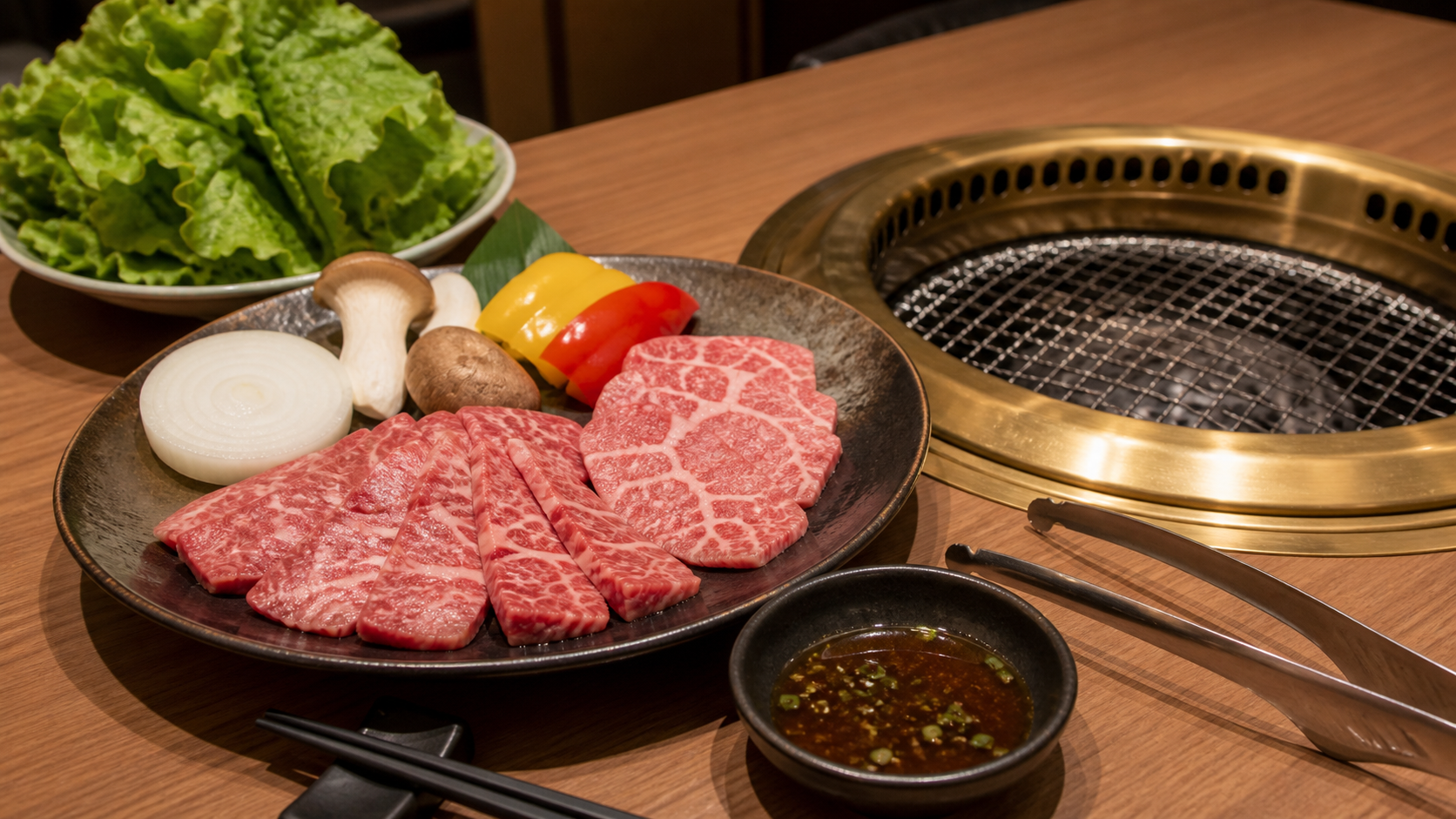
Information checked: August 26, 2026. Yakiniku is Japanese tabletop barbecue: diners grill small cuts of meat and vegetables over a gas or charcoal grill. It is interactive and easy to share, but a satisfying first meal depends more on reading the menu, separating raw-meat tools and controlling heat than on automatically ordering the most expensive A5 wagyu.
A meal cooked together at the table
Modern Japanese yakiniku has strong historical ties to Korean food culture and developed into its own restaurant style in postwar Japan. Small portions arrive raw, allowing a group to compare cuts and seasonings at its own pace. Salt-seasoned items are usually grilled before heavily sauced meat so the mesh stays cleaner and flavors remain distinct.
Wagyu, domestic beef and A5 are different labels
Wagyu refers to four Japanese cattle breeds and their recognized crosses; kokusan-gyu indicates cattle raised in Japan for the required period and is not a synonym. Kobe, Matsusaka and Omi are famous regional brands, not “the highest grade.” Japan’s carcass grade combines yield (A–C) and meat quality (1–5). A5 can be intensely marbled, but leaner beef may suit diners who prefer a firmer, beefier taste. Check the restaurant’s origin and grade display rather than relying on vague “premium” wording.
Common cuts and an easy first order
| Menu term | Typical character |
|---|---|
| Karubi | Rich rib/short-plate style cuts |
| Rosu | Usually leaner, though the exact cut varies by shop |
| Tan | Beef tongue, often salt-seasoned with lemon |
| Harami | Diaphragm-area meat with deep flavor |
| Horumon | A broad category of offal; texture and cooking time vary greatly |
Start with a small assorted plate, vegetables, rice or salad. Order another round only after discovering the cuts you enjoy. A casual meal often falls around ¥3,000–¥6,000 per adult; all-you-can-eat and premium wagyu courses vary widely. Confirm tax, drinks, table charges and time limits before ordering.
How to grill safely and politely
- Use the supplied tongs to place raw meat on the grill; never touch raw meat with eating chopsticks.
- Use clean chopsticks or the restaurant’s designated cooked-food tongs to remove it.
- Cook chicken, pork and offal thoroughly. Follow staff guidance for every cut.
- Grill only a few pieces at once. Crowding cools the grill and dripping fat can cause flare-ups.
- Do not pour water onto a flame or touch the hot mesh. Call staff if fire persists or the mesh needs replacing.
- Ask before cooking for others, as preferred doneness differs.
Allergies, halal and vegetarian needs
Marinades and dipping sauce may contain wheat, soy, sesame, apple or seafood-derived ingredients. Kimchi, soup and side dishes can also contain fish products. Shared grills, tongs and kitchens create cross-contact. Japan’s mandatory packaged-food labeling does not guarantee equivalent restaurant disclosure; guests with serious allergies should show the Consumer Affairs Agency’s multilingual allergy communication sheet and confirm what the restaurant can safely handle. Do not assume wagyu is halal unless the meat, seasonings and preparation are certified.
A practical Osaka outing: Tsuruhashi
| Place | Osaka Tsuruhashi Market and surrounding yakiniku district |
|---|---|
| Address | 3-20-31 Higashikobashi, Higashinari-ku, Osaka 537-0024 |
| Access | Immediately around Tsuruhashi Station on the JR Osaka Loop Line, Kintetsu lines and Osaka Metro Sennichimae Line |
| Admission | Free; meals are paid at each restaurant |
| Hours / closed | Vary by business; restaurants and market shops do not share one schedule |
| Recommended plan | Explore the market before dusk, reserve a yakiniku restaurant for dinner, then use the train rather than driving after drinking |
Tsuruhashi is also a multicultural market district shaped by Osaka’s Korean community. Visit respectfully: keep narrow passages clear and ask before photographing vendors or diners.
Frequently asked questions
Should I reserve?
Yes for popular shops, weekends, groups and premium courses. Some tables have 90- or 120-minute limits.
Can I eat yakiniku alone?
Yes. One-person grills, counters and small portions are increasingly common.
Why does staff replace the mesh?
Burnt sauce and fat create smoke and bitterness. Let staff handle the hot mesh.
Official references: JNTO wagyu guide / Osaka official Tsuruhashi guide / Consumer Affairs Agency food allergy sheets