



Information checked: August 2026
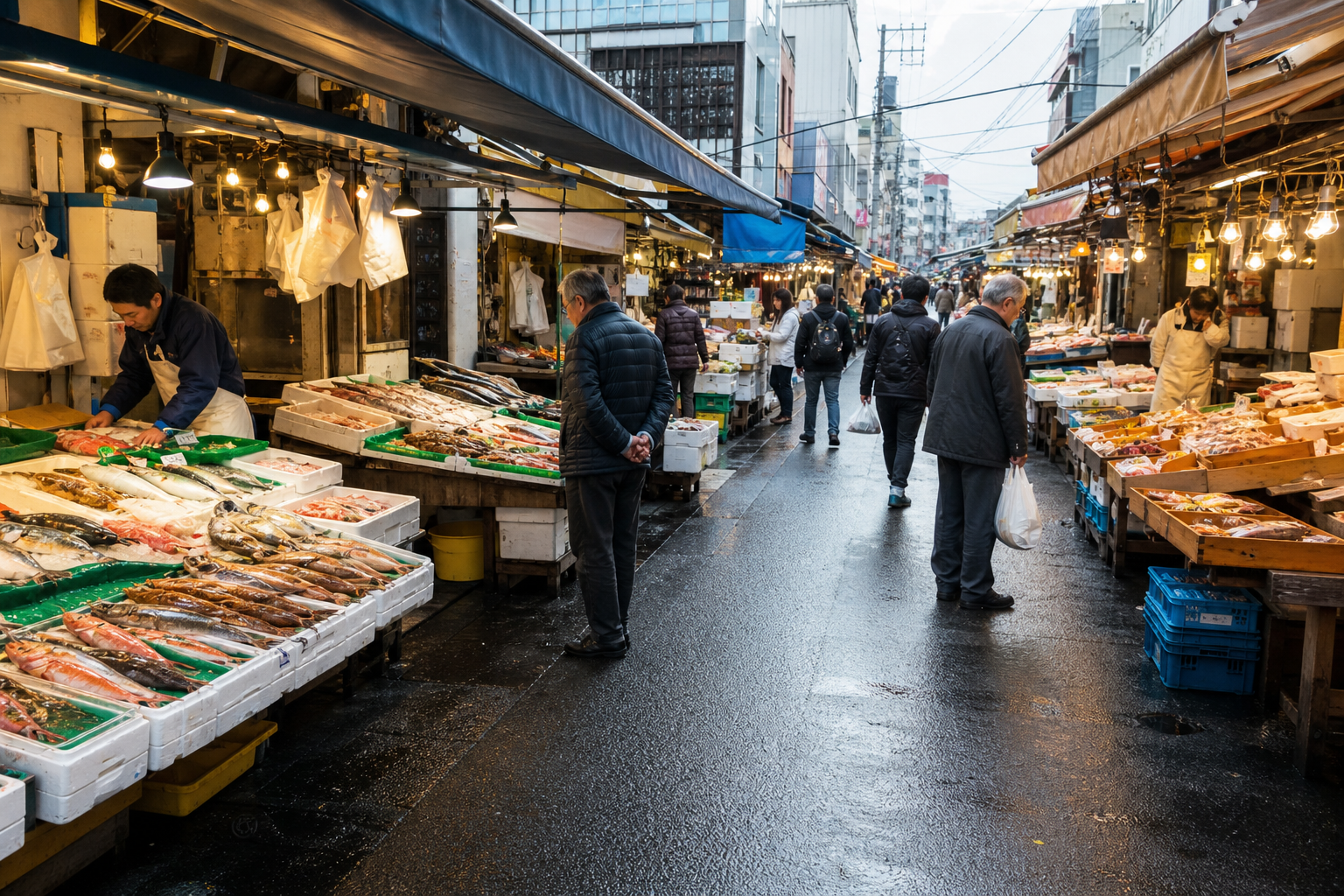
Tokyo’s wholesale fish market moved to Toyosu, but Tsukiji Outer Market remains a working food district filled with seafood vendors, dried-food specialists, tamagoyaki shops, knife stores and compact restaurants. It is not simply a tourist attraction: chefs and food professionals still shop here. Visiting at the right time—and respecting their workspace—makes the experience far more rewarding.
Contents
Tsukiji Outer Market: essential information
- Area: Around Tsukiji 4–6 chome, Chuo City, Tokyo
- Access: About 2 minutes from Tsukijishijo Station Exit A1; 5 minutes from Tsukiji Station Exits 1 or 2; 8 minutes from Higashi-ginza Station Exits 5 or 6
- Hours: Each shop sets its own hours. Most general shopping and dining takes place in the morning through about 2:00 p.m. Tsukiji Uogashi is generally open 5:00 a.m.–3:00 p.m., with all shops operating around 7:00 a.m.–2:00 p.m.
- Closed: Many businesses close on Sundays, national holidays and market holidays, although some restaurants open. Check the official calendar and the individual shop before traveling
- Admission: Free; food and purchases cost extra
Tsukiji Uogashi occupies the Odawarabashi Building (6-26-1 Tsukiji) and Kaikobashi Building (6-27-1 Tsukiji). Professional buyers have priority before 9:00 a.m., so first-time leisure visitors should arrive after nine.
The best time for a first visit: 9:00 a.m.–1:00 p.m.
The market’s official guidance recommends roughly 9:00 a.m.–2:00 p.m. for tourists. Arrive in the nine o’clock hour for a wider selection, or around 10:00 on a weekday for a slightly calmer visit. More items sell out and shops begin closing in the afternoon. If you come early, never block handcarts or working buyers.
A practical food budget
Around ¥1,000: one or two market snacks
Choose a small item such as tamagoyaki, grilled seafood or a Japanese sweet. Prices change by vendor, ingredient and season, so read the posted menu. Eating while walking is prohibited; stop inside the shop, directly in front of it where permitted, or in a designated area.
Around ¥2,000–¥4,000: make breakfast or lunch the highlight
This range can cover a sushi meal, seafood bowl or grilled-fish set at many casual businesses, sometimes with a small extra. Compare the menu, queue and seating instead of automatically joining the longest line.
¥5,000 and above: combine a meal with culinary shopping
Add nori, bonito flakes, tea, dried foods or a Japanese kitchen tool. Fresh foods may be restricted by your destination’s customs and quarantine rules, so check before buying anything to take abroad.
These are planning estimates, not fixed official prices.
A relaxed 90-minute first-visit itinerary
- 9:30: Walk from Tsukijishijo Station and note the flow of the narrow lanes.
- 9:40: Browse seasonal seafood at Tsukiji Uogashi. Do not touch products; ask before taking photos.
- 10:10: Sit down for sushi, a seafood bowl or a grilled-fish breakfast.
- 10:50: Shop for nori, katsuobushi, tamagoyaki or cooking tools.
- 11:00: Continue on foot to Tsukiji Hongwanji Temple or Ginza.
Eight rules that protect Tsukiji’s working culture
- Give professional buyers priority before 9:00 a.m.
- Do not eat while walking
- Leave large luggage in a station locker
- Keep groups small and do not block lanes
- Ask before photographing people or shop interiors
- Do not touch seafood or other products without permission
- Do not haggle
- Smoke only in designated areas
Floors can be wet and slippery. Closed-toe walking shoes are safer than sandals or high heels.
Frequently asked questions
Is Tsukiji worth visiting on Sunday?
Many retail shops close, but the official FAQ says roughly one-third of restaurants may operate. Choices are limited, so check the calendar and the restaurant’s current notice.
Do I need a reservation?
No reservation is needed to explore the market. Restaurant policies vary, and many tiny businesses do not take bookings.
Are vegetarian or halal meals easy to find?
Fish-free dishes may still contain animal-based dashi or alcohol in seasonings. There is no market-wide guarantee; ask each shop about ingredients and preparation before ordering.
Official sources: Shopping and etiquette / Tsukiji Uogashi / Market calendar