



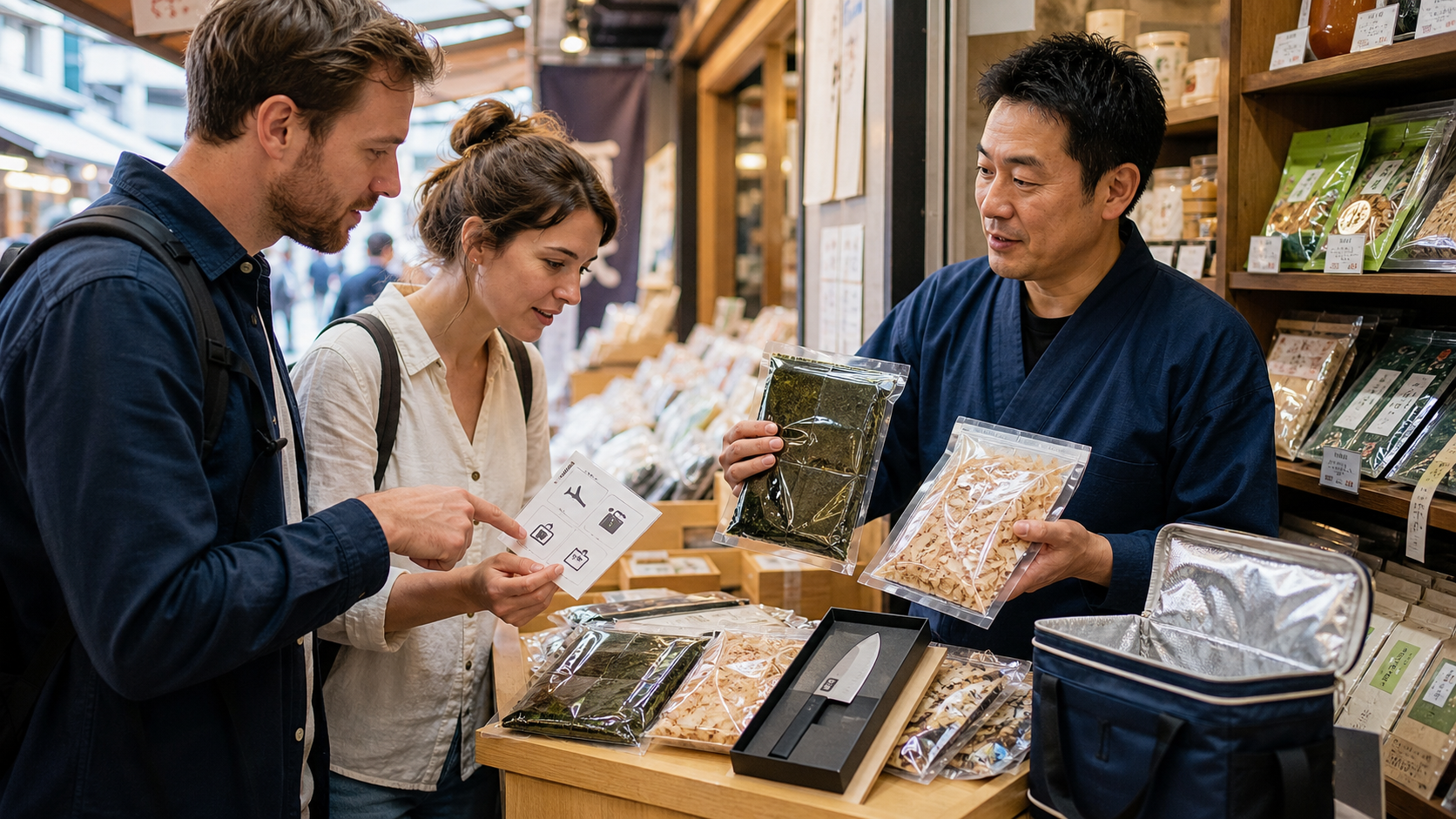
Information checked: August 26, 2026. Tsukiji is more than a place to eat seafood. Its specialist shops supply cooks with nori, katsuobushi, tea, seasonings, cookware and knives—useful souvenirs if you choose for the journey home rather than for a photograph. This guide focuses on buying, packing and asking the questions that prevent waste.
Start with products that survive the trip
| Purchase | Why it works | Ask before paying |
|---|---|---|
| Nori and kombu | Light, flat and often sealed | Unopened shelf life, storage humidity, origin and intended use |
| Katsuobushi / dashi packs | Concentrated taste with little luggage weight | Whole block or shaved; fish ingredients; destination import rules |
| Tea, sesame and spices | Easy to share and compare | Roast, grind, allergens and whether the pack is factory sealed |
| Tamagoyaki | A Tsukiji classic for eating soon | Same-day storage, egg and dashi allergens; not a long-flight souvenir |
| Cookware | Durable cultural object with daily use | Material, induction compatibility, weight and care |
| Fresh seafood | Excellent locally, difficult in transit | Safe holding time, refrigeration, hotel acceptance and destination law |
“Professional grade” does not automatically mean best for a visitor. A restaurant-size kombu pack may lose aroma after opening, and a delicate carbon-steel knife may be unsuitable in a humid home. Tell the seller how many people you cook for, what dish you make and how long your flight is.
Compare purpose, not the biggest price tag
For nori, ask whether it is intended for sushi, rice balls or everyday rice: crispness, thickness and seasoning differ. Kombu varieties release different levels of umami and may suit clear stock, simmering or eating. Katsuobushi ranges from convenient shavings and dashi bags to whole blocks that need a shaver. The useful question is “What would you recommend for miso soup at home?” rather than “Which is the most expensive?”
Check the ingredient list, best-before date, opening instructions and storage temperature. Photograph the label only after asking permission. If you cannot read it, request a short handwritten product name and preparation ratio; translation apps can misread stylized labels.
A Japanese kitchen knife needs a transport and care plan
Choose by task: a versatile gyuto or santoku suits many home cooks; specialist single-bevel knives require technique. Ask about stainless versus carbon steel, handedness, sharpening angle, local maintenance, blade cover and whether engraving delays collection. Hold a display knife only when invited and follow the staff member’s grip instructions.
Never place a kitchen knife in cabin baggage. Keep it sheathed, boxed and secured against movement in checked luggage, then confirm the airline, departure airport, transit country and destination rules before purchase. Rules and baggage liability vary. A receipt and clear retail packaging may help explain the item but do not override law. Check whether possessing or carrying that blade at home is lawful.
Vacuum packing is not the same as refrigeration
A sealed pack can still require chilling. Ask the seller for the storage temperature, safe time outside refrigeration and whether the product can be frozen. Count the full period from purchase to hotel refrigerator, airport, flight, transfer and home—not only flight time. Confirm that your accommodation accepts food deliveries and has adequate cold storage before ordering.
For a long journey, dried and shelf-stable goods are usually the lower-risk choice. If buying chilled seafood for use in Tokyo, make it the last purchase, use an insulated bag and refrigerate promptly. Do not rely on smell to judge safety, and do not assume hotel ice or a small minibar keeps food at a safe temperature.
Destination customs decides what may enter
Meat, fish, plants, seeds, fruits and even some processed products can face permits, declarations or bans. Requirements depend on product, processing and destination, and can change after an outbreak. Check the destination government’s customs, animal-quarantine and plant-quarantine pages before buying; declare when required. A shop saying “good for souvenirs” is not an import permit.
Tax-free service is shop-specific. Ask before checkout, carry the required passport or approved digital details and follow Japan’s current procedures. Japan’s refund-method tax-free system is scheduled to begin on November 1, 2026, so travellers around the transition must check the National Tax Agency’s latest instructions. Do not open or consume an item if the applicable tax-free rules prohibit it.
Shop after professional buyers, without blocking work
The official market guidance recommends visitors come from 9:00 a.m.; professional buyers have priority earlier, and Tsukiji Uogashi is open to general visitors after 9:00. Move in small numbers, leave suitcases in a locker, wear closed non-slip shoes and keep carts and bicycles clear. Do not touch produce or seafood. Ask before photographs—many retailers prohibit them—and eat only at the shop or designated space, not while walking.
Small shops may prefer cash, while card acceptance varies. Confirm the final price and quantity before packing begins. A useful sequence is: Kore wa jōon de mochikaeremasu ka? (Can this travel at room temperature?), Shōmi kigen wa itsu desu ka? (What is the best-before date?) and Shashin wa ii desu ka? (May I take a photo?).
Practical information for Tsukiji Outer Market
| Area / address | Tsukiji Outer Market, around Tsukiji 4–6-chome, Chuo City, Tokyo. Tsukiji Uogashi: 6-26-1 and 6-27-1 Tsukiji. |
|---|---|
| Access | Official guide: about 1 minute from Tsukijishijo Station (Toei Oedo Line) or Tsukiji Station (Tokyo Metro Hibiya Line); about 3 minutes from Higashi-ginza Station. Exact walking time depends on exit and shop. |
| Admission | Free; purchases and experiences cost extra. |
| Visitor window | Official shopping guidance recommends 9:00 a.m.–2:00 p.m. Individual shop hours differ and goods may sell out. |
| Closures | Many shops close Sunday, public holidays and selected Wednesdays. Check the official calendar and the specific shop. |
| Information | Plat Tsukiji offers maps, English assistance, lockers, ATM/currency exchange and a tax-refund counter for participating shops; service hours differ from shop hours. |
A useful 75-minute shopping route
- 0–10 minutes: begin at Plat Tsukiji, confirm the calendar, lockers and participating services.
- 10–30 minutes: compare two dry-goods specialists; record use, ingredients, unopened shelf life and storage.
- 30–50 minutes: inspect cookware or knives without committing; confirm material, maintenance, packing and airline rules.
- 50–65 minutes: return to the best-matched shops and buy only quantities you can use.
- 65–75 minutes: photograph receipts and labels with permission, separate fragile goods and put chilled purchases in insulation.
For a general food-and-access itinerary, use our separate complete Tsukiji guide; this article deliberately concentrates on culinary shopping and safe transport.
Official references: Tsukiji shopping guidance / Plat Tsukiji services and manners / official access map / MAFF animal and plant health / plant export quarantine / MLIT air-transport dangerous-goods guide / National Tax Agency: November 2026 tax-free change