



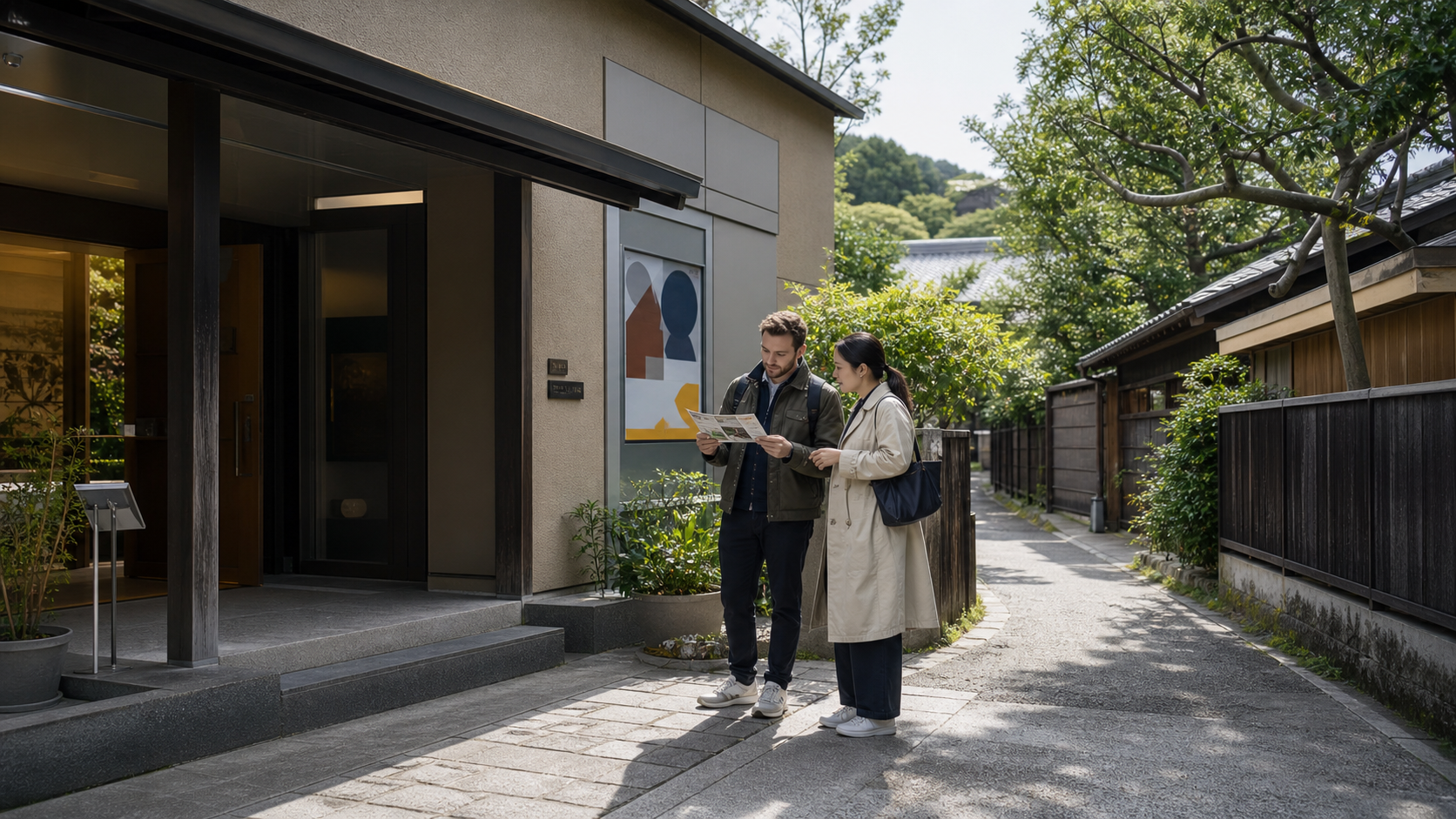
Information checked: August 26, 2026. Kamakura’s art is not separate from the old capital. Painting, cinema and modern architecture occupy former homes, garden plots and streets leading toward Tsurugaoka Hachimangu. This compact route joins three small museums without turning temple precincts or residential lanes into a photo set.
Art here grows from homes, gardens and memory
Kamakura became a political centre in the late twelfth century, but this walk is not a claim that every artwork is medieval. Kaburaki Kiyokata settled in Kamakura after World War II; the Kawakita museum interprets international film culture through a former residential setting; the prefectural annex presents modern and contemporary exhibitions. The contrast is the story.
Kaburaki Kiyokata Memorial Art Museum
| Address | 1-5-25 Yukinoshita, Kamakura, Kanagawa 248-0005 |
|---|---|
| Access | About 7 minutes from JR/Enoden Kamakura Station East Exit via Komachi-dori. |
| Hours | 9:00–17:00; last admission 16:30. |
| Closed | Monday except holidays; next day when applicable, Dec 29–Jan 3 and display changes. |
| Admission | Thematic exhibition: adult ¥300, child ¥150; special exhibition: adult ¥450, child ¥220. Verify the current exhibition. |
The artist’s former residence and studio make scale important: look at how a painter of modern Japanese life worked, not only at individual images. No parking or bicycle rack is provided.
Kamakura City Kawakita Film Museum
| Address | 2-2-12 Yukinoshita, Kamakura, Kanagawa 248-0005 |
|---|---|
| Access | About 8–10 minutes from Kamakura Station East Exit; Komachi-dori can be crowded. |
| Hours | 9:00–17:00; last admission 16:30. |
| Closed | Monday; open on a Monday holiday and generally closed the next weekday; display-change/special closure periods. |
| Admission | Current official FAQ: exhibition adult ¥300 / child ¥150; special exhibition adult ¥500 / child ¥250. Screenings and events have separate prices and tickets. |
Check whether you want only the exhibition or a timed screening. A museum ticket does not automatically secure a film seat.
Museum of Modern Art, Kamakura Annex
| Address | 2-8-1 Yukinoshita, Kamakura, Kanagawa 248-0005 |
|---|---|
| Access | Use the museum’s current access page; allow extra time from Kamakura Station through the busy Hachimangu area. |
| Hours | 9:30–17:00; last admission 16:30. |
| Closed | Monday except public holidays, exhibition changes and Dec 29–Jan 3. |
| Admission | Varies by exhibition. Check the current exhibition page rather than using an old fixed price. |
The annex is useful for comparing a modern museum building and garden with the older urban fabric. Do not confuse it with the separate Hayama building.
A realistic walking order
- 09:00: start at Kiyokata before Komachi-dori becomes busiest.
- 10:00: walk to Kawakita; allow 45–75 minutes for an exhibition, longer for a screening.
- Lunch: leave museum entrances and residential lanes clear; reserve if travelling on a peak day.
- 13:00: continue toward Tsurugaoka Hachimangu and the Modern Art Annex.
- 15:00: choose the Annex or shrine cultural facilities according to the current calendar—not every venue.
Monday is a poor default because several institutions close. Exhibition-change periods can also make the full route impossible.
Quiet looking is part of the experience
Photography rules vary by exhibition and artwork. A phone icon on one display does not authorize filming throughout the building. Ask about photography, video, flash and social posting; do not photograph other visitors, labels with restricted material or staff without consent. Keep bags away from works, use lockers if directed and write with pencil where required.
Traditional lanes are residential. Do not photograph through gates, block doors, sit on walls or publish a private “shortcut.” At shrines and temples, worship and ceremonies take priority over composition.
Kamakura’s short distances can still be difficult
Crowds, slopes, narrow pavements and summer heat make map distances deceptive. Confirm step-free entrance, elevator, accessible toilet, seating, wheelchair route, assistance and stroller rules with each museum. None of the three should be assumed accessible in exactly the same way because their buildings and garden paths differ.
From Tokyo, use current railway information for JR Yokosuka Line or Shonan-Shinjuku services; transfers vary by origin. Do not promise a universal “one hour.” Save the exact East Exit and museum addresses.
Budget, bad weather and FAQ
Plan for three admission fees, a possible screening ticket, lunch and transport. Small museums are good in rain, but the route between them is outdoors; carry compact rain gear and use non-slip shoes. In severe weather, follow railway and municipal warnings rather than continuing a walking itinerary.
Can all three be visited in half a day?
Only if exhibitions are open and you skip screenings. A slower full day gives the buildings and gardens proper attention.
Is the route suitable for children?
Yes when the exhibition suits them, but check stroller storage, film rating, quiet-room expectations and child admission.
Official references: Kiyokata museum / Kawakita Film Museum / Kawakita prices and access / Museum of Modern Art / Tsurugaoka Hachimangu area