


Information checked: August 26, 2026. Japan’s startup ecosystem is not a sightseeing collection of famous companies. It is a network of founders, universities, manufacturers, investors, local and national government, test markets and first customers. This guide explains the policy context, shows how to visit a genuinely public innovation hub in Tokyo, and helps founders or curious travelers attend events without treating workspaces as exhibitions.
2026 is a policy phase, not proof that every target has been achieved
Japan approved its Startup Development Five-year Plan in November 2022 around three pillars: people and networks, stronger funding and more varied exits, and open innovation. Later policy revisions strengthen the plan, but targets such as investment scale, startup numbers and global competitiveness are ambitions, not present facts. Avoid declaring Tokyo “Asia’s number one” from a promotional target or one ranking. Cabinet Secretariat startup policy portal
Look beyond consumer apps to research and industrial collaboration
| Area | Useful question |
|---|---|
| Deep tech and university research | How does a laboratory result become a regulated, manufacturable product? |
| Robotics and hardware | Who supplies components, test sites and first customers? |
| Climate, mobility and infrastructure | Is the pilot solving a measured public problem or only demonstrating technology? |
| Health and biotechnology | What evidence, approval, reimbursement and privacy steps remain? |
| Regional innovation | Does the business strengthen local capacity or merely use a rural location as branding? |
Large-company collaboration can offer manufacturing, distribution and procurement, while also creating slow decisions and unequal bargaining power. “Open innovation” is a relationship to investigate, not an automatic success label.
J-Startup is a support selection, not an investment recommendation
METI, JETRO and NEDO operate J-Startup with public and private supporters. METI announced 31 new selections in March 2025 and reported 239 selected companies across the programme at that point. Selection can provide support for exhibitions, overseas expansion, R&D, regulatory work, bidding and matching; it does not guarantee profitability, product safety or future status. Use the official selection page as one research lead, then verify corporate filings, evidence, customers, risks and the date. METI J-Startup
Tokyo Innovation Base: the most practical first visit
Address: 3-8-3 Marunouchi, Chiyoda, Tokyo 100-0005. Access: one minute from JR Yurakucho Kyobashi Exit, immediately outside Tokyo Metro Yurakucho D9, or three minutes from Ginza-itchome Exit 1. Hours: weekdays 10:00–21:00; weekends/holidays 10:00–17:00; last entry 30 minutes before closing. Closed December 28–January 3 and on designated inspection, disaster or operational days. Fee: general facility use is free, but TIB FAB may have actual-cost charges. Visitors must register through the TIB app and scan its QR code at the gate. After registration, self-guided facility viewing is available during opening hours without advance booking; guided tours and events follow their own schedules. Official FAQ
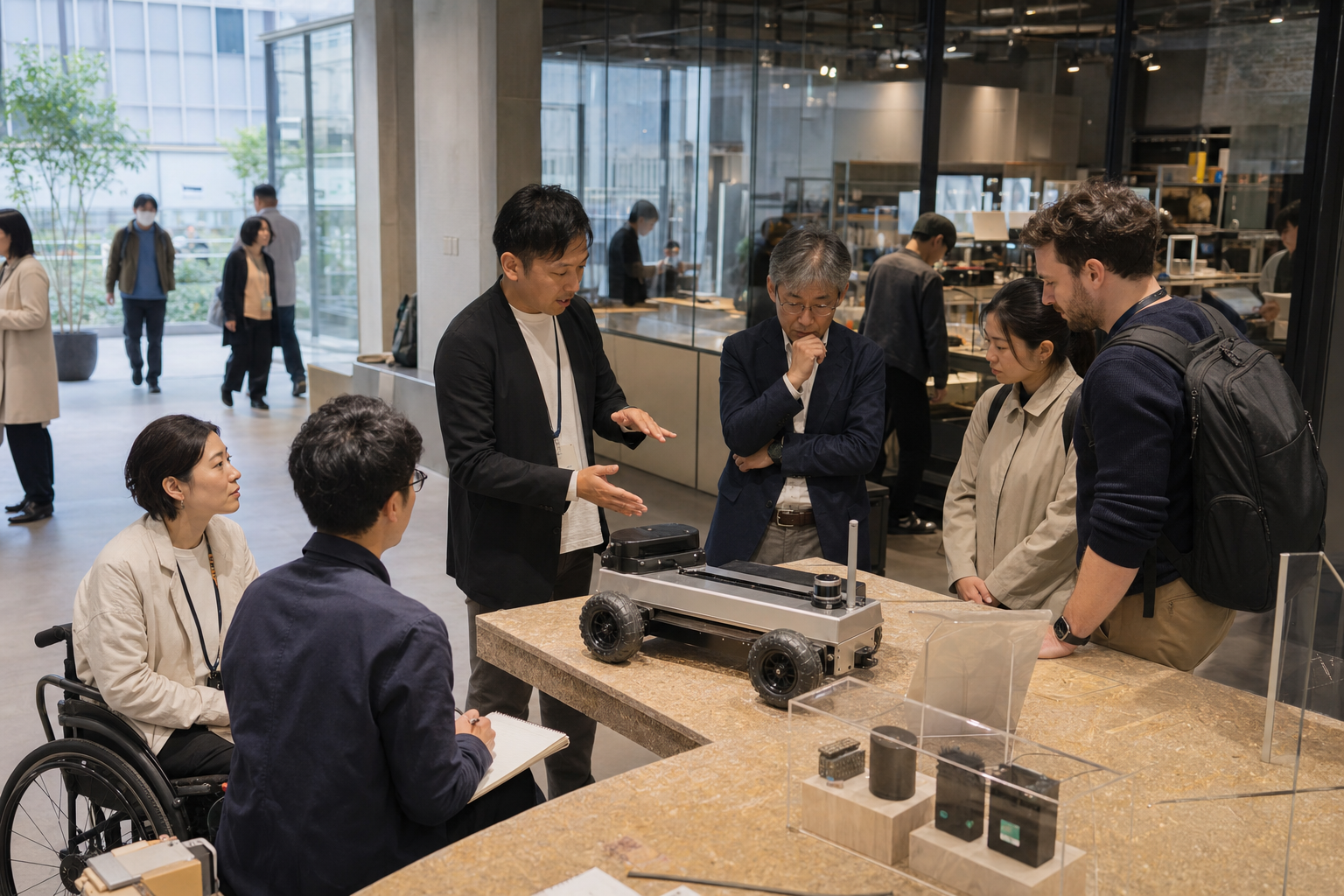
Do not expect a permanent trade show. Product displays, test marketing, events and users change. A useful visit observes how hardware testing, public support, customer feedback and networking connect, without interrupting people working.
SHIBUYA QWS is not a free public coworking lounge
Location: 15F, Shibuya Scramble Square, directly connected to Shibuya Station. QWS is a membership-based co-creation facility, not an office for rent and not a place where any passerby can freely work. Published membership plans involve application, screening, registration and recurring fees. Travelers should instead choose a public event whose page explicitly permits general registration, then follow that event’s fee, language, identity and entry conditions. Never infer access from the building’s observation or retail floors. Official membership information / Event calendar
Choose an event by access and learning value
| Check | Decision |
|---|---|
| Audience | Public, member-only, invited, founder-only or investor-only? |
| Language | Japanese, English, bilingual or interpretation provided? |
| Format | Talk, pitch, demo, workshop, matching or tour? |
| Registration | Advance form, approval, waitlist, ID, app or QR code? |
| Recording | Are slides, prototypes and participants photographable? |
| Commercial intent | Learning, recruitment, sales, investment or partnership? |
An “English title” does not guarantee an English session. A free ticket does not grant access to private floors, databases or attendee contact details.
Replace “companies to watch” with a dated evidence sheet
For each company, record the legal name, founding date, headquarters, sector, product stage, latest official announcement, regulator or clinical status where relevant, disclosed funding source, named customers or pilots, and unresolved risks. Separate a government selection, accelerator participation, award, fundraising announcement and verified market deployment. Do not copy valuation or “unicorn” claims without date, currency and source.
A visit is not immigration, incorporation or fundraising advice
METI describes Startup Visa as a route allowing eligible foreign entrepreneurs a limited preparation period before establishing a business; participating local authorities, requirements and later residence-status conditions vary. Business Manager status, incorporation, tax, labour, banking, IP and sector licences are separate. Use the current national and municipality pages and obtain qualified legal or tax advice. An event organizer or coworking host cannot promise a visa, grant or investment. METI information for entrepreneurs
Treat a startup hub as a workplace
Register honestly, wear the issued badge if required and remain in permitted areas. Ask before photographing whiteboards, screens, prototypes or people. Do not scan badges, collect emails, record pitches, upload faces or approach every attendee with a sales script. Give a concise introduction, state why the conversation may be useful, accept a refusal and follow up only through a channel the person offered. Never publish confidential, health, biometric or unpublished product information.
A responsible half-day in Yurakucho and Shibuya
- Before travel: register for the TIB app and one confirmed public event; save the event language, gate and cancellation rules.
- 10:00–11:30: visit TIB, examine public product/testing areas and attend a tour only if scheduled.
- 11:30–12:00: write three evidence-based questions rather than collecting company names.
- Afternoon: move to Shibuya only for a registered public QWS event; otherwise use its published online event information instead of attempting entry.
- Afterward: verify claims against company, regulator and government sources before sharing or making a business decision.
The strongest impression of Japan’s startup culture comes from seeing how research, manufacturing discipline, public problems and cautious trust-building meet—not from photographing a fashionable office.