



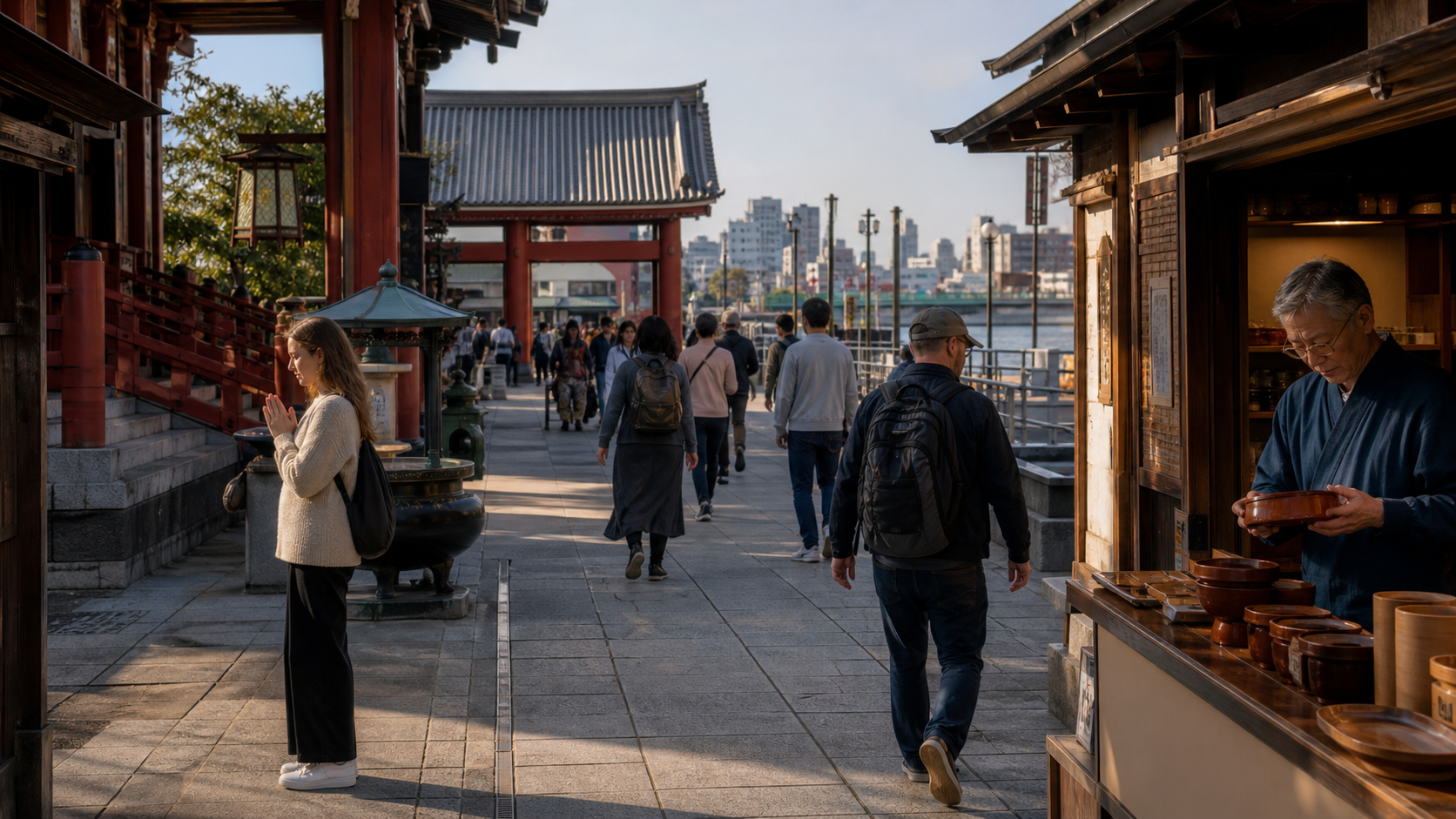
Information checked: August 26, 2026. Asakusa is more than a ten-minute photograph at Kaminarimon followed by snacks. It is a living Tokyo neighbourhood where worship at Sensoji shaped a temple town, merchants served visitors, craftspeople supplied everyday life and entertainment, and the Sumida River moved people and goods. This guide builds a half- or full-day walk while distinguishing temple and shrine customs and protecting shop, worship and resident circulation.
A neighbourhood built by worship, commerce, craft and the river
Sensoji’s foundation legend begins in 628, when an image of Kannon was found in the river. Shops, lodging, food and crafts developed around the people who came to worship; entertainment also grew in Edo-period Asakusa. Temples, long-established shops, new businesses, workshops, schools and homes still share the district. Residents are not performers placed there to recreate “old Tokyo,” so do not follow people, peer into a closed workshop or use a doorway as a portrait set.
Choose one route for your interest and stamina
| Route | Time | Main sequence | Best for |
|---|---|---|---|
| Worship | 2–3 hours | Visitor centre→Kaminarimon→Nakamise→Sensoji→Asakusa Shrine | First visit, limited time, religious culture |
| Craft | 4–5 hours | Sensoji→Edo Taito Traditional Crafts Center→Kappabashi | Making, kitchen tools, considered shopping |
| River and town | 3–4 hours | Sensoji→Nitenmon→Sumida Park→water bus | Less walking, urban waterfront |
| Quiet early visit | 60–90 minutes | Early worship→riverside | Atmosphere before shops open |
Do not force every branch into one day. If a cruise matters, work backward from that day’s confirmed departure and boarding time.
Start at Asakusa Culture Tourist Information Center
The centre opposite Kaminarimon is more than a map counter. From its free eighth-floor terrace, the north–south axis of Kaminarimon, Nakamise and Sensoji becomes clear, with the Sumida River to the east. The first-floor counter assists in Japanese, English, Chinese and Korean. It is also the right place to confirm events, accessible toilets, nursing space and current wheelchair or stroller loan conditions before entering the busiest streets. The terrace is for orientation and a brief view, not a tripod studio or picnic area.
At Sensoji, visit Kannon rather than only the gate
- Do not form a wall across Kaminarimon or Hozomon. Take a photograph, then move to the side.
- Where the purification basin is in use, use the ladle or running water without placing your mouth on the vessel.
- At the Main Hall, place an offering quietly, join your palms and bow. Do not automatically perform the shrine pattern of two bows, two claps and one bow at a Buddhist temple.
- Some worshippers draw incense smoke toward the body, but this is not a medical cure. Do not blow or direct smoke at others.
Entry to the grounds is free. The Main Hall opens 06:00–17:00 from April through September and 06:30–17:00 from October through March. After it closes, remain quiet outdoors because homes surround the temple. Sensoji official information
On Nakamise, combine shopping with circulation
Nakamise is a shopping street of independently operated businesses, not one attraction with a single opening time or closing day. Eat a snack at the place designated by its seller, return the wrapper to that shop if accepted or carry it away. Do not touch another shop’s goods with food-soiled hands, cross a queue for a photograph or sit in front of a home, emergency exit or delivery access. Ningyo-yaki, kaminari-okoshi and rice crackers are not a command to buy from one viral queue: compare ingredients, allergens, shelf life, packaging and payment. Taito City specifically asks visitors not to obstruct passages, to take rubbish away and to consider others when filming. Taito tourism manners
In Oku-Asakusa, see “Edo style” as technique
The Edo Taito Traditional Crafts Center presents about 250 objects from roughly 50 fields, including Edo blinds, Tokyo paulownia chests and Edo joinery. The useful questions are what material, tool, joinery, repair and daily purpose shaped an object—not whether it looks “perfectly old Japan.” Artisan demonstrations and special exhibitions are schedule-dependent; they are not guaranteed every day. Oku-Asakusa mixes homes, working premises and ordinary businesses. An open-looking doorway is not necessarily a visitor entrance, and a working craftsperson requires permission before photography or conversation.
Kappabashi is more than plastic food samples
Kappabashi clusters specialist suppliers of pots, knives, ceramics, lacquerware, signs, furniture, packaging and food models for restaurants. Almost all shops also sell to individuals, but there is no single street-wide schedule. The association says most shops open Saturday, while only about 30% open Sunday, making a weekday or Saturday more reliable. Ask before handling a knife; keep the blade packaged and check airline, checked-baggage, customs and destination rules before purchase. Do not open professional stock, photograph staff or occupy a narrow shop with luggage without permission.
Recover the waterside history of Asakusa
Asakusa did not develop as an inland attraction detached from the river. Water transport supported worship, trade and entertainment. A modern water bus lets visitors read bridges, engineered banks and Tokyo’s growth from the Sumida River. Departures vary by destination, boat, operating day and price, and can be cancelled for weather or river conditions. Do not assume a direct Odaiba boat exists at your preferred hour; check the same-day timetable and fare. When no sailing fits, Sumida Park provides a short, free break away from Nakamise congestion.
Addresses, access, prices and closing days
| Place | Address and access | Price and hours | Closure and recommended use |
|---|---|---|---|
| Asakusa Culture Tourist Information Center | 2-18-9 Kaminarimon, Taito. One minute from Tokyo Metro Asakusa Exit 2. | Free. Counter 09:00–20:00; terrace 09:00–22:00. | Open year-round, subject to maintenance. Start here for geography and accessibility. |
| Sensoji | 2-3-1 Asakusa, Taito. About five minutes from Ginza, Toei Asakusa, Tobu and TX Asakusa stations. | Grounds free. Main Hall 06:00–17:00 Apr–Sep; 06:30–17:00 Oct–Mar. | Events may restrict areas. Worship before the day crowds. |
| Edo Taito Traditional Crafts Center | 2-22-13 Asakusa, Taito. Five minutes from TX Asakusa. | Free, 10:00–18:00. | Closed second and fourth Tuesdays; following day if a holiday. Check demonstrations. |
| Kappabashi | Association: 3-18-2 Matsugaya, Taito. About five minutes from Tawaramachi Station. | No street admission; shop prices and hours vary. | No common closing day. Weekday or Saturday is more practical than Sunday. |
These details can change for observances, maintenance or individual business decisions. Recheck the official page immediately before travel.
A day that can shrink when streets or bodies are tired
- 07:00–08:30: worship at Sensoji. Before shops open, focus on faith and architecture rather than expecting food stalls.
- 09:00: use the visitor centre for rest, toilets, orientation, current events and cruise status.
- 10:00–12:00: choose one thoughtful Nakamise purchase. If lunch queues are excessive, spread toward Tawaramachi or Kuramae rather than blocking the approach.
- 13:00–15:00: select either the crafts centre or Kappabashi. If doing both, set a shopping limit in advance.
- After 15:30: return to the river. Board only if a confirmed cruise fits; otherwise rest in the park and leave by train.
Store large suitcases at your accommodation or an authorized station facility. Never leave them on tactile paving, a shop entrance, the Main Hall approach or a residential doorway, and never step in front of a rickshaw or bicycle for a photograph. Asakusa matters not because Edo survives unchanged, but because belief, commerce and skill continue to adapt within a present-day neighbourhood.