



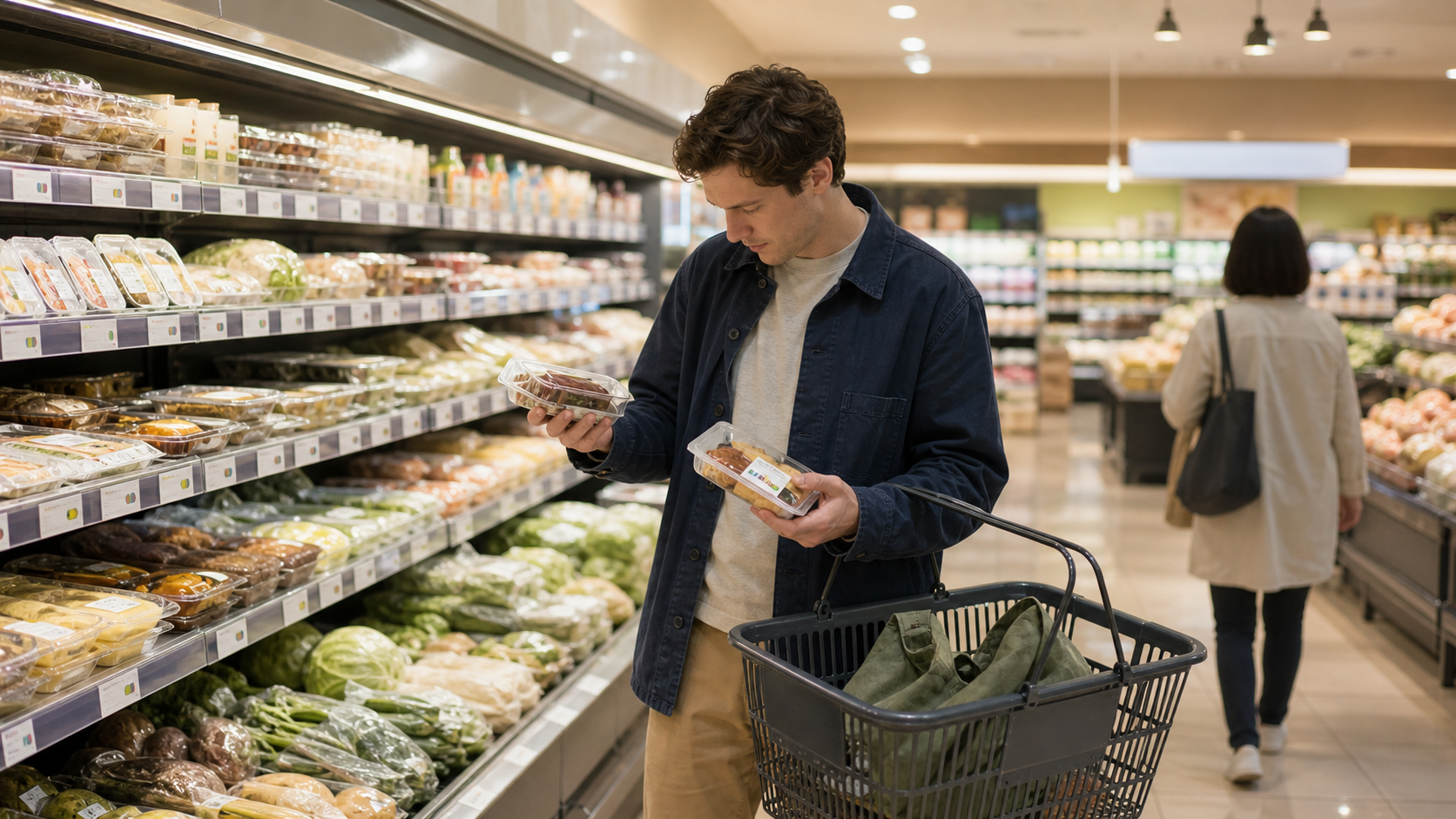
Information checked: August 26, 2026. A neighborhood supermarket is a useful window into how Japanese households balance season, price, convenience and food waste. The experience becomes genuinely useful only when you can read a date label, carry chilled food safely and move through checkout without treating local shoppers as part of a tourist display.
Choose an everyday store that fits your route
A station mini-supermarket, residential full-size store, regional chain, cooperative and wholesale-style shop carry different ranges. Use the store’s official page to verify the exact branch address, nearest exit, hours, closing days, payment, parking and delivery; map listings are secondary. This is a general cultural guide, so it has no single address, admission fee or closing day.
A useful order for reading the shop
| Department | What it reveals | Check |
|---|---|---|
| Produce and seafood | Origin, season, cut and small packs | Chilled; raw or cooking-use |
| Meat | Thin slices, small cuts and hot-pot portions | Species, cut and origin |
| Deli and bento | Grilled fish, simmered food, fried food, sushi and rice balls | Use-by, storage and utensils |
| Seasonings and dry goods | Dashi, miso, soy sauce, vinegar and seaweed | Volume, liquid and ingredients |
| Dairy and sweets | Regional milk, seasonal flavors and household sizes | Refrigeration, milk, egg and wheat |
Read season and origin, not just “limited” packaging
New harvests, local vegetables, new-season rice and regional seafood can connect the shelf to place and time. A seasonal flavor, however, is not necessarily made with local ingredients. Product origin, main-ingredient origin and manufacturing site are different facts. Read the Japanese label instead of relying on rustic artwork or a regional name.
Use-by and best-before are not the same
- 消費期限 (use-by): common on bento, sandwiches and deli food; the safety-oriented limit.
- 賞味期限 (best-before): common on snacks, instant noodles and cans; the quality-oriented date.
- 保存方法 (storage): follow refrigerated, frozen or room-temperature instructions. Opening can shorten the stated life.
Dates can use two-digit Western years or Japanese eras. The Consumer Affairs Agency provides a downloadable multilingual food-label guide.
A packaged label is helpful, not universal protection
Japan requires packaged processed foods to label eight specified allergens: shrimp, crab, walnut, wheat, buckwheat, egg, milk and peanut. The system differs from other countries; recommended allergens, alcohol, loose goods and some in-store prepared foods have limits. For a severe allergy, ask about shared equipment and compound ingredients and do not buy when staff cannot confirm. Halal, vegetarian and vegan travelers should also check dashi, gelatin, animal fat, mirin and cooking sake rather than judging by appearance.
A discount sticker is not a fixed-time promise
割引 is a percentage reduction, 値引 a yen reduction and 半額 half price. Some stores reduce deli food near closing, but timing, rate and eligible stock vary. Do not crowd the case, ask staff to sticker an item or buy more than you can refrigerate and finish. The most meaningful food-waste choice is the right quantity, not the largest markdown.
From basket to bagging table
- Place the basket at the register; say arimasen if asked for a point card you do not have.
- Request the size and number of paid bags, or use a clean reusable bag.
- Some staffed lanes send you to a separate payment terminal. Use only methods displayed at that branch and keep a backup.
- Bag items at the sakkā-dai table, separating cold, raw and leak-prone food.
Covered plastic shopping bags have generally been charged since July 2020; store prices and statutory exceptions vary. METI guidance
Groceries are not automatically tax-free
Ordinary food and drink excluding alcohol and dining out generally carries 8% consumption tax; alcohol and household goods generally carry 10%. Check tax-included shelf prices and the receipt’s categories. Traveler tax-free shopping exists only at authorized shops when eligibility, minimum purchase, passport and handling conditions are met. Japan moves to a refund method in November 2026, so follow the National Tax Agency’s current notice for the actual travel date. Do not plan same-day deli food on the assumption that it qualifies.
The purchase is only safe if the journey is safe
- Pick refrigerated and frozen items last; plan an insulated bag and the journey to a working refrigerator.
- Do not carry sashimi or bento for hours or buy it for a room without cold storage.
- Do not photograph shoppers, staff, security systems or markdown work without permission.
- Do not open food before payment, block aisles with a cart or abandon products in the wrong temperature zone.
- Take only the chopsticks, spoons, ice and condiments the store offers and you need.
A first 45-minute supermarket visit
- 0–10 minutes: confirm hours, hotel refrigerator, allergy card and return route.
- 10–25: walk produce, seafood, deli and seasonings; choose one or two genuinely regional items.
- 25–35: read ingredients, date, storage and volume; remove anything you cannot finish.
- 35–45: check out, bag by temperature, verify receipt and travel directly back.
The cultural value is not “strange Japanese food.” It is how households make daily choices within season, budget, time and safety. Buying a small amount after reading it carefully is the most respectful way to share that everyday culture.