



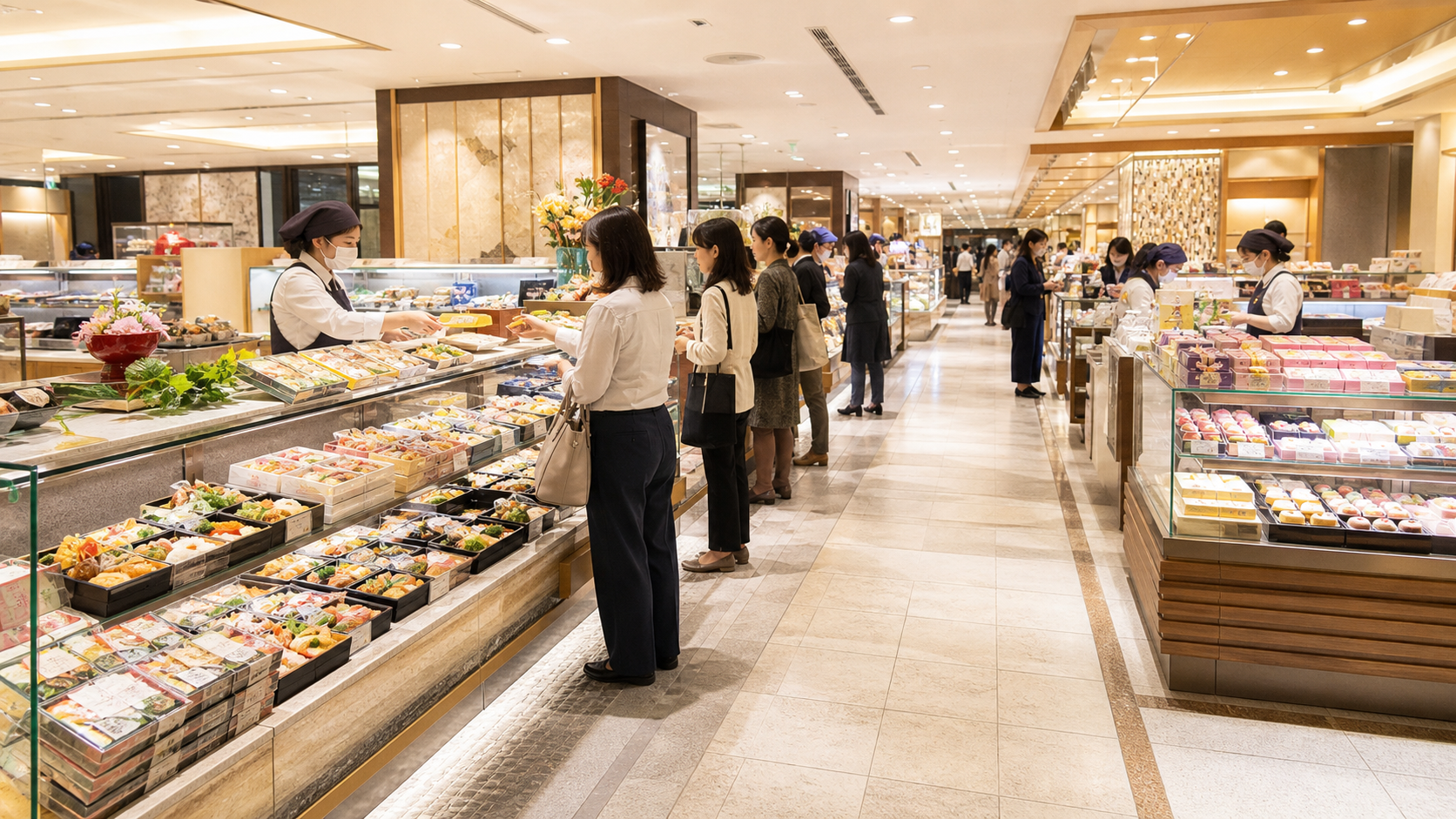
Information checked: August 26, 2026. A depachika is the food hall in the basement (chika) of a department store (depāto). It is not normally a food court: most counters sell takeaway prepared foods, bento, sushi, bread, sweets, gifts and fresh ingredients. The pleasure lies in comparing specialist counters, but refrigeration, eating space and train etiquette matter as much as appetite.
What you will find
| Prepared foods | Salads, fried foods, grilled fish, simmered dishes and items sold by piece, pack or weight |
|---|---|
| Bento / sushi | Ready meals for home or an appropriate train journey; check use-by time and temperature |
| Bread / pastry | Japanese and European styles; tongs and trays may be provided at self-service areas |
| Wagashi / gifts | Seasonal sweets and regional boxes; fresh and shelf-stable products need different handling |
| Fresh food | Meat, fish, fruit and vegetables intended mainly for cooking, not immediate eating |
| Event space | Short regional fairs and rotating shops; “limited” describes availability, not guaranteed superiority |
A 45–60 minute shopping route
- Photograph the official floor map or note the exits and refrigerated counters.
- Walk once without buying to compare portions, allergens and queues.
- Choose shelf-stable gifts first, then prepared food and chilled dessert last.
- Ask about use-by time and ice-pack duration before paying.
- Leave enough time to find your rail platform; major station-connected stores can have several basement levels.
JNTO recommends avoiding lunch and dinner peaks. Near closing time some perishables may be reduced, but discounts are neither universal nor guaranteed; never delay a meal solely for a markdown.
Queues, quantities and payment
Each counter usually has its own queue and register. Do not form one line for the whole floor or reach across another customer. For foods sold by weight, point to the sample amount or request grams; for individual pieces, show the number with fingers. Confirm whether the displayed price is per piece, per 100 grams or per pack.
Cards and mobile payment acceptance can differ by counter even within one store. Keep the receipt until you confirm the contents. Samples are offered selectively: accept only when staff invite you, use the provided pick and do not return for repeated portions.
Takeaway does not mean “eat anywhere”
Many depachika floors have no public tables. Ask for an eat-in space, use a department-store rooftop or rest area only if eating is allowed, or take food to your accommodation. Bento is customary on many shinkansen and limited-express services, but strongly scented meals are considerate only when space and circumstances permit. Avoid eating on crowded commuter trains, beside counters or while blocking corridors.
Dispose of containers where instructed. A bottle recycling opening is not a general rubbish bin; if none is available, carry waste away.
Cold chain, labels and dietary needs
- 消費期限: use-by date/time; respect it for ready meals.
- 要冷蔵: refrigeration required.
- An ice pack only buys limited travel time; ask how long, then refrigerate promptly.
- Raw sushi, dairy desserts and mayonnaise dishes should not spend hours in a hot locker, car or backpack.
- Fish, shellfish, egg, milk, wheat, soy, sesame and nuts are common; sauces and shared kitchens create cross-contact.
Counter foods are not always labeled like packaged goods. For a serious allergy, use the Consumer Affairs Agency communication sheet and do not rely on appearance. “Vegetable bento” may contain fish stock; confirm vegan, halal and gluten-free needs before purchase.
Food and Japan’s tax-free system
Tax-free shopping is for eligible visitors exporting goods, not for a lunch eaten in Japan. Under the system in effect on this article’s check date, food is a consumable and tax-free purchases must meet store and purchase conditions; goods bought tax-free may not be consumed in Japan. From November 1, 2026, Japan moves to a refund method: eligible shoppers pay tax at purchase and receive the tax-equivalent refund after customs confirms export within 90 days, following the operator’s procedure. Rules and participating counters can differ, so check the National Tax Agency and the department store on the purchase date. Do not open or eat goods that must be presented for export.
Frequently asked questions
Is depachika expensive?
It spans everyday side dishes to luxury gifts. Compare unit price and portion; the department-store setting does not make every item premium.
Can I sit and eat there?
Often not. Look for a clearly marked eat-in area or ask staff.
Can staff pack a gift?
Usually at gift counters. Say when you will present it, travel time and whether refrigeration is available.
Official references: JNTO: depachika guide / National Tax Agency: November 2026 refund method / Consumer Affairs Agency: allergy communication sheet