



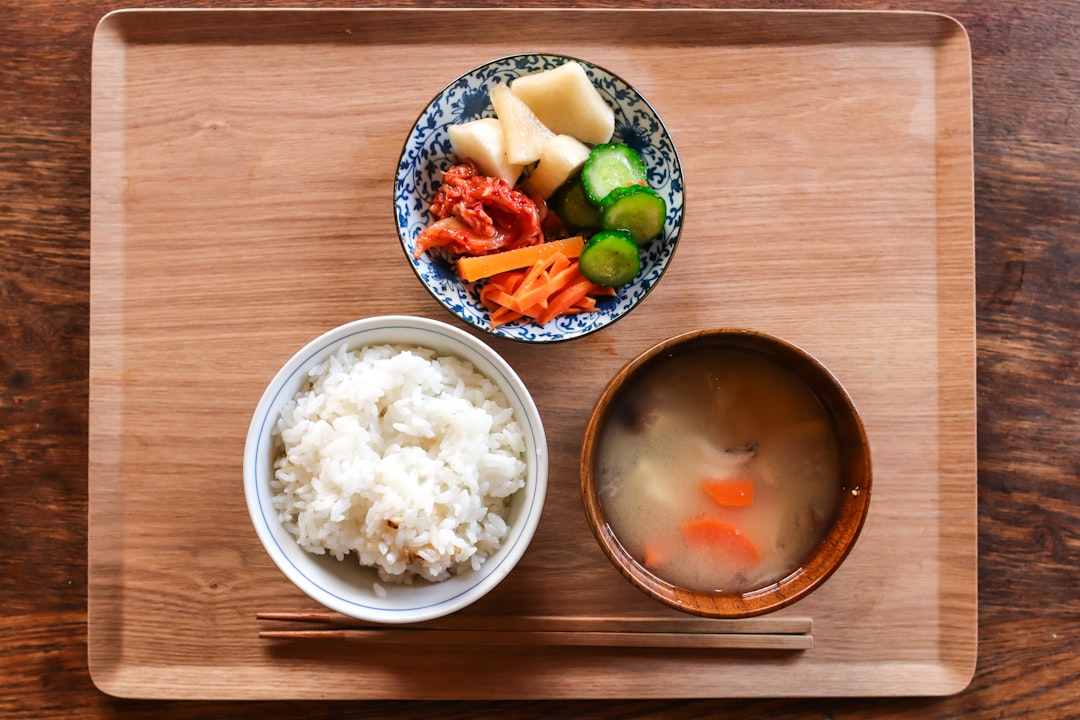
Information checked: August 26, 2026. A Japanese breakfast is not one fixed menu. A ryokan may serve rice, miso soup, grilled fish, egg, tofu, vegetables and pickles in small dishes; a business hotel may offer a buffet; a neighborhood restaurant or chain may provide a quick set meal; a convenience store works when the first train matters more than ceremony. Choosing the right format for your appetite and departure time is more useful than chasing an “authentic” checklist.
From ichiju sansai to a practical morning set
Ichiju sansai means one soup and three side dishes, traditionally accompanying rice and pickles. It is an influential washoku framework, not a rule that every household or hotel breakfast follows. The underlying idea is balance: staple rice, soup flavored with dashi, a main dish and smaller seasonal sides served together. Modern breakfasts may be much simpler.
What you may find on the tray
| Item | What to expect |
|---|---|
| Rice | Usually plain white rice; regional grains or porridge appear at some inns |
| Miso soup | Miso and dashi with tofu, seaweed, clams or vegetables; dashi often contains fish |
| Grilled fish | Salmon, mackerel or local fish, commonly salted; watch for fine bones |
| Egg | Rolled omelet, fried egg, hot-spring egg or raw egg where served |
| Natto | Fermented soybeans with a strong aroma and sticky texture; optional at many buffets |
| Tsukemono / nori | Pickles and dried seaweed add salt and contrast in small quantities |
Breakfast should not be marketed as automatically “healthy”: salt, portion size and ingredients vary. Choose according to your own medical and dietary needs.
Four ways to eat breakfast in Japan
| Ryokan | Most cultural detail and regional ingredients. Serving time is often fixed; confirm whether breakfast is included before booking. |
|---|---|
| Hotel buffet | Flexible Japanese and Western choices. Take small portions and return for more instead of wasting food. |
| Set-meal restaurant / chain | Fast and affordable; some use ticket machines or multilingual touchscreens. Morning menus and hours differ by branch. |
| Convenience store | Useful for an early departure: onigiri, boiled egg, yogurt, salad and soup. Check allergens and find an appropriate place to eat. |
JNTO’s July 2026 breakfast guide lists restaurant chains such as Yoshinoya, Matsuya, Sukiya, Gusto and Denny’s as casual options, but not every branch serves the same breakfast or opens early. Use the branch’s official listing rather than assuming.
A simple ordering and timing plan
- Check breakfast hours and final entry the night before.
- At a ryokan, arrive at the assigned time; elaborate sets may not be portable or refundable.
- At a ticket machine, select the breakfast or asa teishoku category, keep the ticket and follow the number display.
- Ask whether rice size or refills are included before ordering.
- Allow at least 30–45 minutes for a ryokan meal and less for a simple chain set, but do not schedule by assumption.
Useful phrases include “asa teishoku wa arimasu ka?” (Do you have a breakfast set?) and “gohan wa sukuname de” (less rice, please).
Allergies, vegetarian and halal considerations
Miso soup, simmered vegetables, rolled omelet and natto sauce may contain bonito or other fish stock. Soy, wheat, egg, milk, sesame, fish and shellfish are common. A buffet adds shared utensils and cross-contact. Explain serious allergies before booking a ryokan because a complete substitution may not be possible on the morning itself. A meal without visible meat is not automatically vegetarian, vegan or halal.
Small breakfast manners
- Say itadakimasu if comfortable, but quiet appreciation matters more than performance.
- Lift small rice and soup bowls toward the mouth; do not lift large plates.
- Open a lidded soup bowl carefully and replace the lid as the venue does.
- Check grilled fish for bones and place them neatly at the plate edge.
- At a buffet, use each dish’s serving utensil and never return food from your plate.
- Do not take buffet food away unless the hotel explicitly permits it.
Frequently asked questions
Is natto always included?
No. It may be optional, offered only at a buffet or absent entirely.
Can I request a Western breakfast at a ryokan?
Some inns offer a choice, but many prepare one Japanese menu. Ask before booking, not at serving time.
How much does breakfast cost?
It ranges from a low-cost chain set to a substantial hotel or ryokan charge. Check the current branch or accommodation plan; old fixed prices are unreliable.
Official references: JNTO 2026 breakfast guide / JNTO teishoku guide / MAFF Washoku Way