



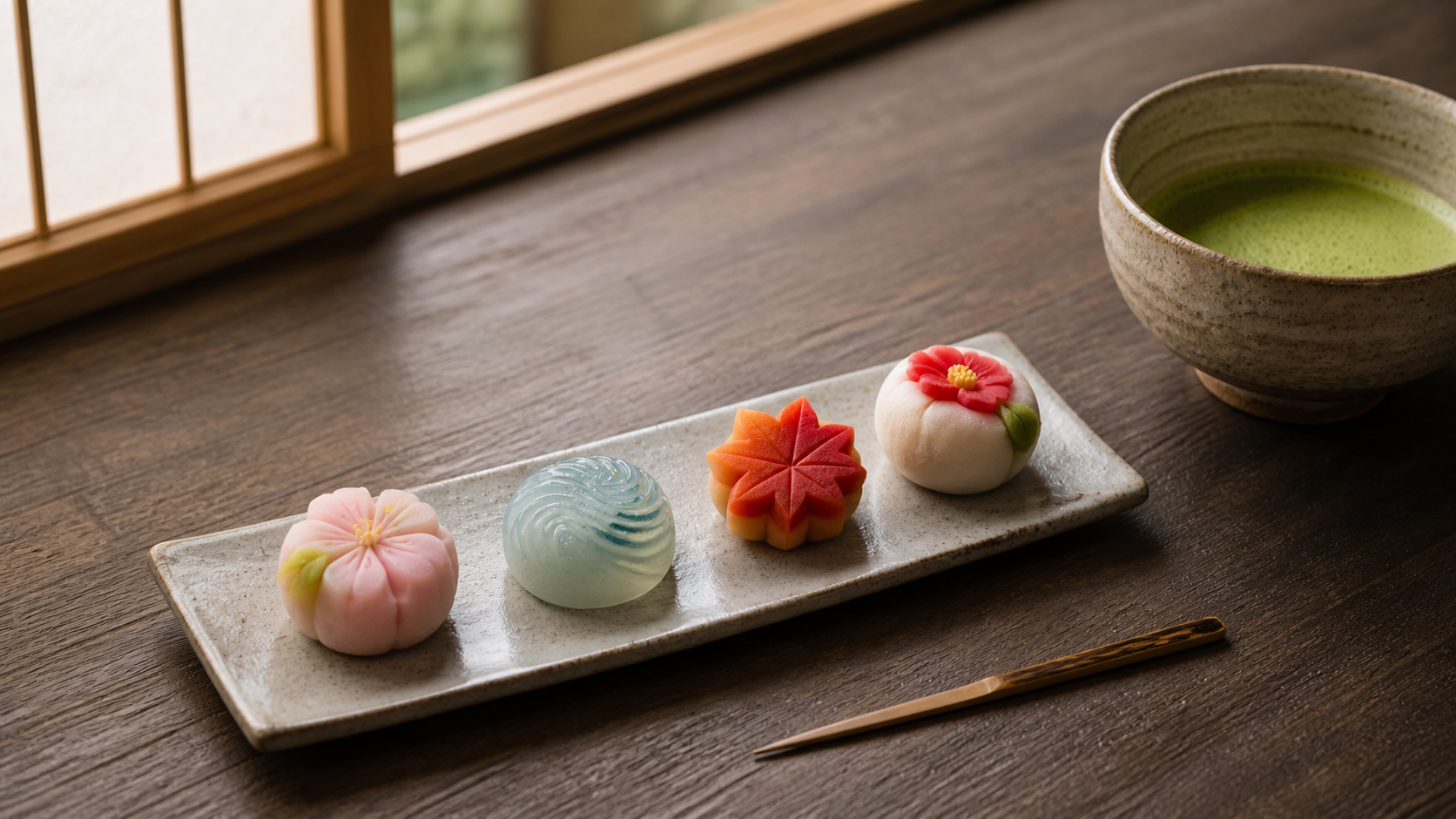
Information checked: August 26, 2026. Wagashi are not merely “Japanese desserts.” A confectioner can suggest spring rain with a translucent layer, autumn with a maple-shaped nerikiri, or the New Year with red and white. This guide explains how to read those signals, choose sweets that suit your journey, and enjoy them without turning a relaxed café visit into a performance of tea ceremony.
Three ways wagashi express a season
Seasonality appears through ingredients such as cherry leaf, kudzu or chestnut; through shape and colour such as plum, clear water or snow; and through a poetic product name called a kamei. The name may allude to classical poetry or a local landscape rather than describe the flavour. Ask what the motif means: that short exchange is often the best cultural part of the purchase.
Wagashi are frequently described as less sweet than Western desserts, but that is not a rule. Yōkan and bean-paste sweets can be intensely sweet because sugar also affects texture and preservation. Choose by style, portion and tea pairing, not by stereotype.
A practical four-season calendar
| Season | Common examples | What to notice |
|---|---|---|
| Spring | Sakuramochi, kusamochi, hanami dango, kashiwamochi | Cherry, young leaves and festival colours; kashiwamochi is associated with Children’s Day |
| Summer | Wakaayu, kuzuzakura, mizuyōkan | Translucence, flowing water and cool presentation; “cool-looking” does not mean the sweet needs freezing |
| Autumn | Ohagi, chestnut kinton, chestnut mushi-yōkan | Harvest ingredients, moon-viewing and maple motifs |
| Winter / New Year | Zenzai, yuzu sweets, hanabiramochi | Snow, camellia, pine-plum-bamboo and auspicious red-white colours |
This is a reading guide, not a guaranteed sales schedule. Regions, lunar-calendar observances, weather and each maker’s style shift the timing. Many shops introduce a motif for only a few weeks.
Know the type before you travel
- Namagashi: high-moisture fresh sweets such as many nerikiri and daifuku; usually short-dated and delicate.
- Han-namagashi: intermediate-moisture sweets; shelf life varies widely.
- Higashi: dry sweets such as pressed sugar confections; often easier to carry, but fragile.
- Other familiar families: steamed manjū, baked dorayaki, monaka wafers, mochi sweets and poured or moulded yōkan.
These categories describe making method or moisture, not quality. A simple bean cake from a neighbourhood shop may carry as much regional history as elaborate nerikiri.
How to eat wagashi with tea
In a formal tea gathering, the sweet is normally eaten before the matcha so its sweetness prepares the palate. In a casual café, follow the tray layout and the host’s instructions. Use the supplied kuromoji pick for a soft sweet, divide it into manageable bites, and lift each portion neatly. There is no need to imitate ceremonial gestures you have not been taught.
Ask before photographing a counter or preparation area, keep voices low in a tea room, and do not handle display samples. When sharing a box, use the provided utensil rather than fingers.
Are the leaves edible?
The salted cherry leaf around sakuramochi is often eaten, but preference and the maker’s intention differ. The oak leaf around kashiwamochi is generally a fragrant wrapper and is removed. Bamboo leaves around chimaki are also normally removed. If uncertain, ask rather than copying the next customer.
Dietary needs and mochi safety
Traditional recipes often centre on rice, beans, sugar, agar, kudzu, chestnut, sesame or matcha, but wagashi are not automatically vegan or gluten-free. Egg and wheat occur in baked sweets; modern products may use milk, butter, gelatin or honey. Soy, sesame and nuts are common, and shared equipment creates cross-contact. For a serious allergy, confirm with staff and the original label.
Mochi is sticky and can cause choking. Cut or bite it into small pieces, moisten the mouth first, eat slowly and chew thoroughly. Young children, older adults and anyone with swallowing difficulty need particular care and supervision.
Buying, storage and gifts
- Tell staff when you plan to eat or present the sweet and how long you will travel.
- Check the 消費期限 (use-by time/date), storage temperature and whether refrigeration is required.
- Buy delicate fresh sweets near the end of the day; avoid hot luggage and long locker storage.
- For a long trip, compare yōkan, baked sweets or higashi, but still follow the maker’s label.
- For gifts, state the presentation date; beautiful wrapping cannot extend shelf life.
Good places to compare styles include a specialist wagashi shop, a department-store basement, a temple-town shopping street and a regional souvenir counter. Supermarkets are useful for everyday sweets and clear price comparison.
Frequently asked questions
Is nerikiri the same as wagashi?
No. Nerikiri is one refined type of wagashi, usually shaped from white bean paste and binding ingredients.
Must wagashi be served with matcha?
No. Sencha, hōjicha and coffee can work; follow the shop’s pairing or your preference.
Can fresh wagashi go in checked luggage?
It is usually a poor choice because of heat, pressure and short shelf life. Ask the maker and check destination-country import rules for food.
Official references: MAFF: Japanese confectionery types and seasonal examples / Consumer Affairs Agency: preventing mochi choking