


Information checked: August 26, 2026. Japan’s cafe culture is not one list of photogenic desserts. A neighborhood kissaten, a silent jazz cafe, a specialty roaster and a station chain serve different purposes and follow different rhythms. This guide helps travellers choose the right type, read the menu and use a seat respectfully. Separate guides cover wagashi, matcha sweets and convenience-store desserts in depth.
Kissaten turned imported coffee into a local institution
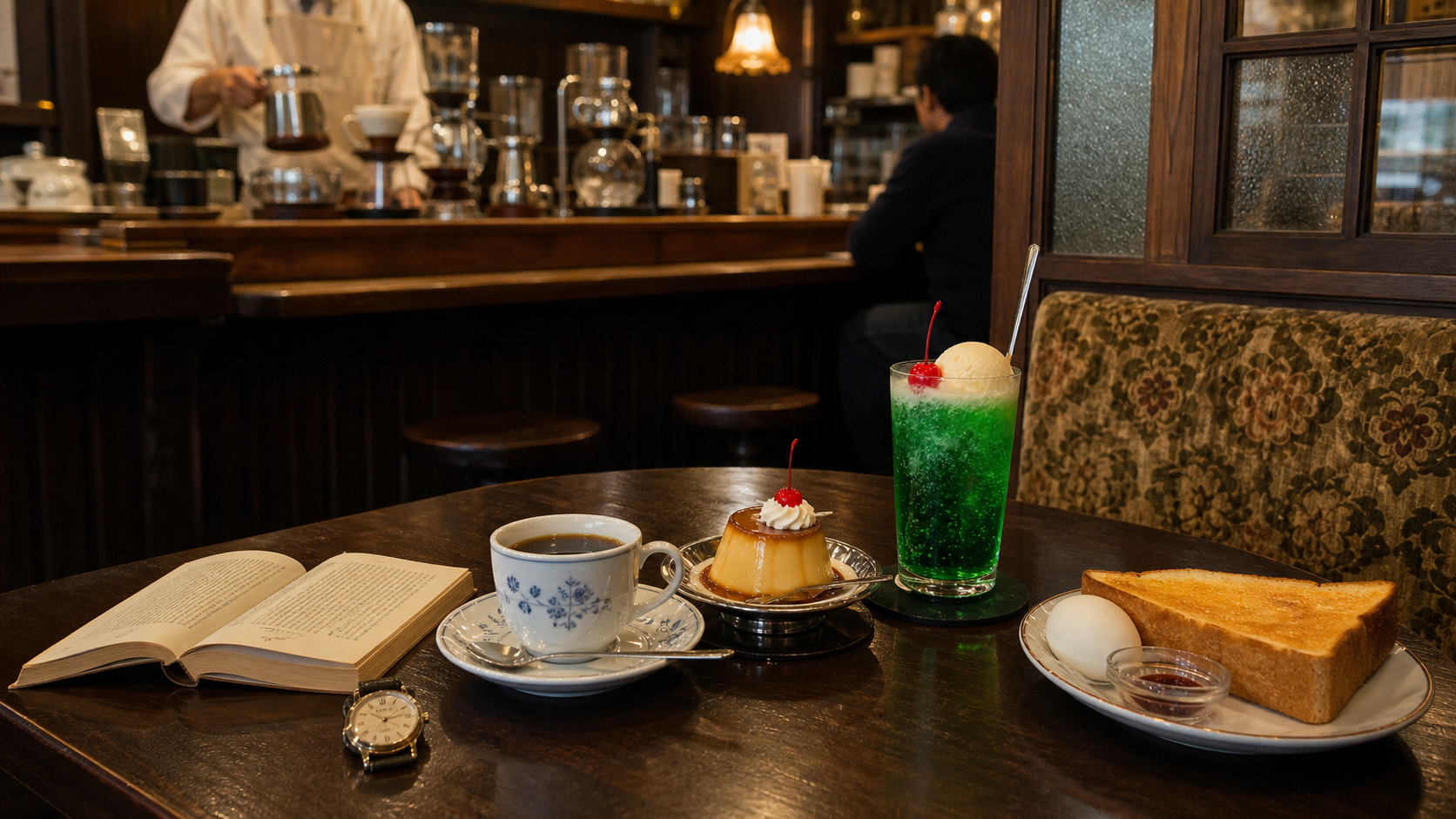
The word kissaten originally referred to a place for drinking tea, but coffee became central. These independent shops grew especially through the Showa era and Japan’s postwar economic expansion, providing workers and students with a place to read, think and talk quietly. Hand-drip, siphon and cold-brew methods developed strong followings.
Jun-kissa (“pure coffee shop”) came to distinguish shops focused on coffee and light food rather than alcohol. The label does not guarantee age, interior, coffee quality or non-smoking status; each surviving shop reflects its owner and neighbourhood.
Choose the cafe type that matches your goal
| Type | What to expect | Check first |
|---|---|---|
| Retro / jun-kissa | Dark-roast coffee, toast, pudding, Napolitan pasta, vintage interior | Smoking policy, cash, stairs, closed day |
| Jazz or classical-music kissa | High-quality sound system and listening-focused atmosphere | Conversation/photography rules, cover or request system |
| Specialty roaster | Bean origin, roast and brewing method foregrounded | Standing/seat service, tasting language, food availability |
| Dessert or fruit cafe | Parfaits, pancakes, seasonal fruit or themed sweets | Queue, reservation, one-order rule, seasonal price |
| Chain / station cafe | Quick service, clearer Wi-Fi and cashless information | Seat-time signs, power outlets and peak restrictions |
Before travelling, record the exact branch address, station exit, opening hours, last order, closed day and current menu. Similar shop names and branches can have different rules.
The classic kissaten menu mixes coffee, sweets and yoshoku
| Item | What it is | Useful check |
|---|---|---|
| Blend coffee | House blend, often darker roasted and hand-brewed | Hot/iced; refills are not normally free |
| Cream soda | Bright soda topped with ice cream, often green melon flavour | Dairy; colour/flavour varies |
| Caramel pudding | Firm custard with bitter caramel, cream or cherry | Egg and dairy |
| Hotcake | Thick, pan-cooked Japanese-style pancake | Preparation time; egg, milk, wheat |
| Morning set | Coffee/tea with toast, egg or salad during set morning hours | Not nationwide or all-day; exact inclusion varies |
| Napolitan | Ketchup-seasoned spaghetti with vegetables and often sausage/ham | Wheat, meat, dairy/egg possible |
| Mixed sandwich | Soft bread with egg, ham and/or vegetables | Ingredients and portion |
Nagoya is particularly known for generous “morning service,” but do not assume every Japanese cafe includes free toast with coffee. Look for the posted time and set conditions.
Wait to be seated, then understand the order unit
- At the entrance, check non-smoking/smoking signs, waitlist and payment.
- Wait for staff to assign a seat even when a table looks empty.
- Confirm whether each guest must order one drink or one item. Children may have a separate condition.
- Ask whether a set already includes coffee before ordering another.
- Order at the table unless the entrance clearly directs counter prepayment.
- Pay at the register if given a bill slip; tipping is not customary.
Water is often provided, but there is no obligation for free refills of coffee. A small independent shop may serve slowly because one person brews, cooks and handles payment.
A purchased drink buys reasonable use, not an office for the day
Some cafes welcome reading; others need turnover. Obey 60-, 90- or 120-minute signs and add an order if the shop explicitly allows extensions. During queues, lunch or weekend peaks, leave after finishing rather than holding a four-person table.
Never assume Wi-Fi, outlets, calls or laptops are permitted. Jazz and classical cafes may value silence; typing and screen light can disrupt listening. Ask before opening a laptop, mute all sounds and avoid video calls. Keep luggage under your chair or use station storage.
Smoking rules, children and accessibility vary by shop
Japan’s revised Health Promotion Act generally prohibits indoor smoking, but transitional exceptions and designated smoking rooms remain, particularly in qualifying older small establishments. Shops must display signs, and anyone under 20 is prohibited from entering smoking rooms. Check current signage rather than assuming “retro” means smoking or smoke-free.
Old kissaten may have narrow doors, basement/upper-floor stairs, fixed booths and small toilets. Contact the shop about step-free access, chair width and accessible toilets. For children, also check highchairs, strollers, smoking exposure and whether quiet music-focused spaces admit young guests.
Planning budget and hidden ingredients
| Order | Planning range per person |
|---|---|
| Coffee or soft drink | About ¥500–¥1,200 |
| Drink and classic sweet | About ¥1,200–¥2,500 |
| Morning or light-meal set | About ¥800–¥2,000 |
| Seasonal fruit parfait / premium dessert | Often ¥1,500–¥4,000+ |
These are planning ranges, not quoted prices. Check tax, one-order rules and seasonal market prices. Pudding, hotcakes, toast, parfait and sandwiches commonly contain egg, milk and wheat; ice cream and whipped cream contain dairy; gelatin, nuts, soy and shared equipment may appear. A “fruit” dessert is not automatically vegan or allergen-free.
A respectful 60-minute visit and FAQ
| Time | Action |
|---|---|
| Before | Verify exact address, opening/closed day, smoking and cash |
| 0–5 min | Wait for seating; read order rules |
| 5–15 min | Choose one drink and, if wanted, one sweet/light meal |
| 15–50 min | Drink slowly, read or talk quietly; take only permitted photos |
| 50–60 min | Check belongings, bring bill to register and leave seat tidy |
May I photograph the interior?
Ask first. Food photos may be accepted while the room, audio equipment, staff and guests are restricted.
Is “coffee” always filter coffee?
No. A kissaten may use pour-over, siphon or nel drip; a modern cafe may focus on espresso. Ask about the house style.
Can I share one dessert?
Often, but each person may still need a drink/item. Confirm before ordering.
Are seasonal limited items always worth queueing for?
No. Seasonality can express ingredients, but scarcity and photo popularity do not prove quality. Compare wait time, price and your actual taste.
Can non-coffee drinkers enjoy kissaten?
Usually. Tea, juice, cream soda and food may be available, but a coffee-specialist shop can have a narrow menu.
Official references: GO TOKYO: kissaten culture / JNTO: old-school coffee shops / JNTO: coffee culture and morning service / Ministry of Health: smoking-room rules