



Tokyo does not have one “best ramen district.” Its appeal lies in choosing a neighborhood that fits your route, preferred broth and tolerance for queues. This guide replaces a fragile top-ten list with a repeatable method for Tokyo Station, Shinjuku, Ikebukuro, Takadanobaba and the Chuo Line’s older ramen towns.
1. Why Tokyo ramen rewards neighborhood exploration
Ramen reached Japan through Chinese-influenced noodle culture and developed into a highly local everyday dish. Tokyo’s density lets cooks combine shoyu, salt, miso, pork-bone, chicken, seafood, dried sardine and modern plant-based approaches. “Battleground” (gekisenku) is marketing shorthand for an area with many competing shops—not a formal district or guarantee of quality.
A bowl reflects many decisions: broth, seasoning base (tare), aromatic oil, noodle thickness and hydration, toppings, and serving temperature. Choose those before choosing a famous name.
2. Five useful ramen areas
| Area | Why choose it | Route clue |
|---|---|---|
| Tokyo Station | Many styles together; ideal for a transfer or rainy day | Tokyo Ramen Street, First Avenue B1, outside the Yaesu-side ticket gates |
| Shinjuku–Okubo | Dense variety and long service hours at some shops | Explore Otakibashi-dori from JR Shinjuku West Exit toward Okubo |
| Ikebukuro | Strong competition, including substantial bowls and tsukemen | Choose east or west exit before leaving the very large station |
| Takadanobaba | Student neighborhood with compact, casual shops | Walk from JR/Seibu/Metro station; check lunch queues |
| Ogikubo–Chuo Line | Neighborhood history and classic shoyu traditions | Combine Ogikubo with Koenji, Asagaya or Nishi-Ogikubo |
Tokyo Ramen Street is the easiest fixed facility to describe: First Avenue Tokyo Station B1, 1-9-1 Marunouchi, Chiyoda City; about one minute from the JR Yaesu Underground Central Gate and outside the paid area. The facility guide lists roughly 10:30–23:00 as general ramen-zone hours, but individual shops, last orders and temporary closures differ. First Avenue is generally open daily; verify the shop on the day.
3. Choose the bowl before the brand
- Shoyu: soy-sauce seasoning with broths ranging from clear chicken to seafood-rich blends.
- Shio: salt-forward seasoning; “light color” does not always mean light flavor.
- Miso: savory, often robust; toppings and regional interpretations vary.
- Tonkotsu: pork-bone broth; may be paired with shoyu tare, so categories overlap.
- Tsukemen: noodles and concentrated dipping broth served separately; portion sizes can be large.
- Abura soba/mazesoba: brothless noodles mixed with tare and oil.
Menus may use chūka soba for a classic-looking ramen, or niboshi for dried-sardine character. Photos help with toppings, but they cannot prove allergens, pork-free status or portion size.
4. Check the exact shop before going
Save the Japanese shop name, exact branch address, nearest station exit, official business hours, last order, regular closing day, cashless policy and sold-out notice. Ramen shops may close early when soup runs out, take irregular holidays or operate separate lunch and dinner sessions. Map opening hours and old review photos are secondary to the shop’s official notice.
Do not travel across Tokyo solely because an old article lists a Michelin distinction or a fixed menu price. Ownership, location, recognition and recipes can change. Keep one backup within the same neighborhood and decide the maximum queue you will accept.
5. Queue and ticket-machine flow
- Read queue signs before lining up; never block a doorway, bicycle path or neighboring business.
- Some shops ask you to buy a ticket first; others require queueing first. Follow that branch’s sign.
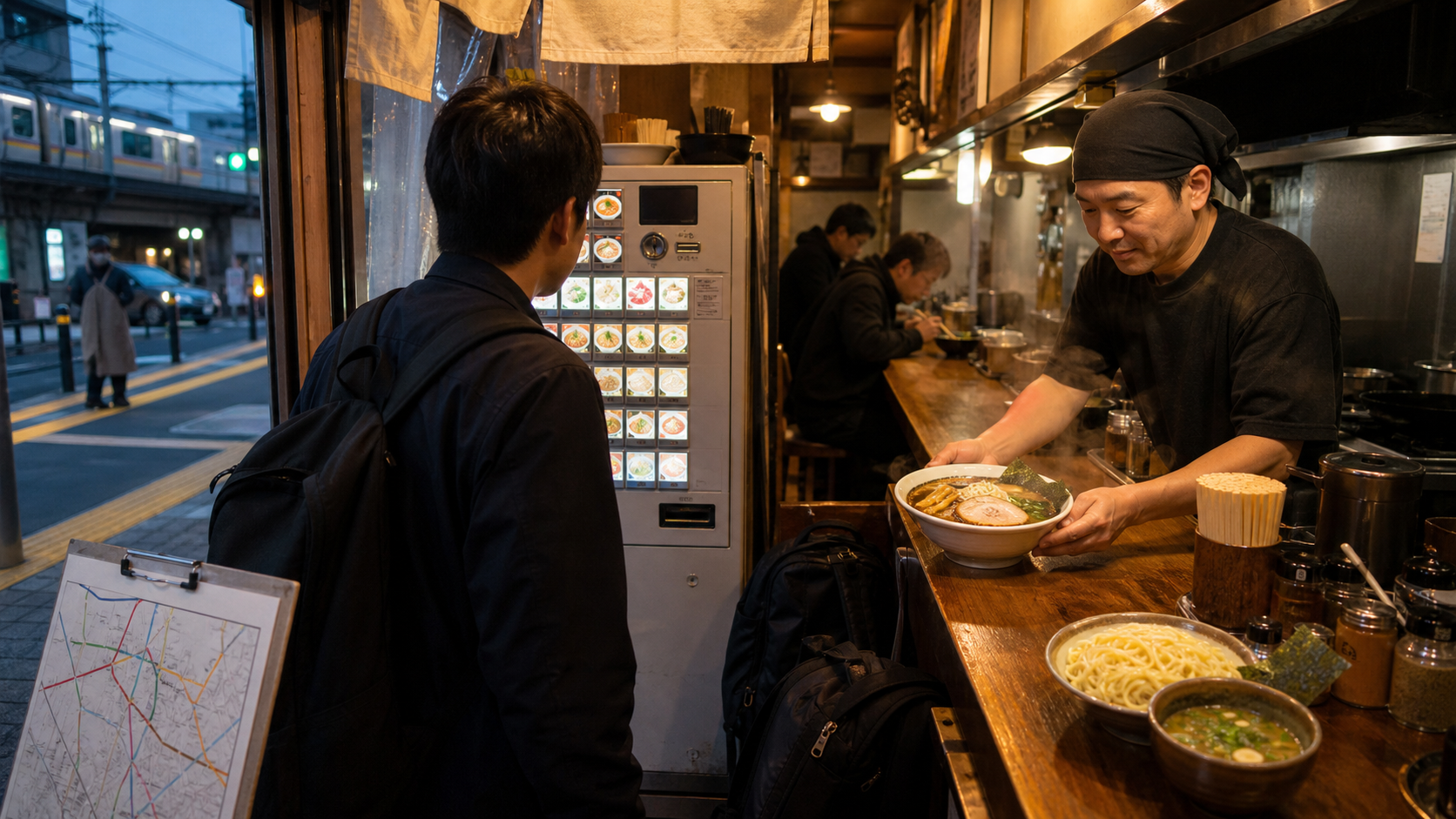
- At a machine, insert payment, choose the basic bowl and toppings, collect ticket and change, then hand the ticket to staff.
- If asked about noodle firmness or richness, 普通 (futsū, standard) is a safe first choice.
- Store luggage before the bowl arrives, eat at a comfortable pace, then leave the counter available once finished.
Lunch roughly 12:00–13:30 and early evening are often busy, but opening-time queues and late service vary. Do not assume “after 14:00” is quiet: famous shops can remain busy, and split-shift shops may be closed.
6. Budget and dietary checks
For planning—not guaranteed prices—allow about ¥900–1,500 for a basic bowl, ¥1,200–2,200 for a special bowl or added toppings, and ¥150–800 for rice, dumplings, extra noodles or a drink. Premium ingredients and central-station locations may exceed this range. Ticket machines may accept cash, cards or mobile payment in different combinations; carry a backup.
Common risks include wheat and sometimes egg in noodles; pork, chicken, beef, fish, shellfish or dried sardine in broth; wheat and soy in tare; and egg, sesame, dairy or nuts in toppings. Removing visible pork does not remove pork broth. “Vegan noodles” do not guarantee a vegan broth or shared kitchen. For a serious allergy, contact the shop in advance and show a written card.
7. Access and accessibility
Record more than “five minutes from the station”: name the exit, whether the shop is inside or outside ticket gates, lift route, street slope and final doorway. Small ramen shops often have a step, narrow aisle, high fixed stools, limited turning space and no accessible toilet. Ask whether a movable chair, table seat or wheelchair position is available.
At Tokyo Station First Avenue, elevators and a multipurpose toilet are listed for the facility, but individual counters can still be tight. Large suitcases should go in a locker or hotel rather than occupy the queue. Families should confirm child seats, stroller storage and whether every guest must order a bowl.
8. Suggested routes and FAQ
Transfer plan: Tokyo Ramen Street, then continue by train. West Tokyo plan: Shinjuku sightseeing plus Otakibashi-dori, or a Chuo Line afternoon at Koenji/Asagaya/Ogikubo. Pop-culture plan: Ikebukuro shopping, then a bowl near the chosen station exit. One ramen stop per route is usually enough; two bowls are easier if shared over separate days.
Must I visit a famous shop? No. A nearby shop matching your preferred style and schedule can be more rewarding. Is slurping compulsory? No; it is accepted, not required. Can I share one bowl? Policies vary, especially at small counters; ask first and expect each seated adult to order at some shops. Do I drink all the soup? You may leave it.
Official references: GO TOKYO food and drink guide, GO TOKYO ramen culture feature, First Avenue Tokyo Station, and the official First Avenue shop guide. Confirm current hours, prices and closures directly before travel.