


Rain does not have to turn a Tokyo day into a chain of malls. The best strategy is to choose one compact district and go deeper. This guide gives you a practical Ueno museum route, plus Marunouchi and Odaiba alternatives, with current prices, access, closing days and weather-safety advice checked in August 2026.
Choose one zone instead of crossing rainy Tokyo
| Zone | Best for | Plan |
|---|---|---|
| Ueno | Japanese culture, art, science | Choose two of three national museums |
| Marunouchi | Architecture and a short central-city day | Tokyo Station building plus one current exhibition |
| Odaiba | Families and science | Miraikan as the anchor; add only a nearby venue |
Ueno is our first choice because major museums stand within one park. There is still an outdoor walk from the station, so wear waterproof shoes and do not schedule every minute.
“Indoors” is not a safety guarantee
Check the Japan Meteorological Agency and your railway operator before leaving. During a typhoon, linear rainband warning or transport suspension, stay near your accommodation and follow official instructions. Do not travel across Tokyo simply because the destination has a roof. Facility announcements override the standard hours below.
A realistic Ueno day: choose two museums
- 09:20: arrive at JR Ueno Station, use the Park Exit and protect 10–15 minutes for the wet walk.
- 09:30–12:00: Tokyo National Museum for Japanese and Asian cultural objects.
- 12:00–13:00: lunch in or near the park; queues grow at noon.
- 13:15–15:30: choose the National Museum of Nature and Science for families, or the National Museum of Western Art for a shorter art visit.
- After 15:30: café or return; keep one hour unscheduled for crowds, lockers and rain.
Trying all three usually produces museum fatigue. Two objects remembered well are more valuable than twenty rooms rushed through.
Addresses, access, admission and closing days
| Facility | Practical information (Aug. 2026) |
|---|---|
| Tokyo National Museum | 13-9 Ueno Park, Taito. About 10 min from JR Ueno or Uguisudani. 9:30–17:00; Fri/Sat and some holiday Sundays to 20:00; last entry 30 min before closing. Collection: adult ¥1,000, university ¥500; under 18 and 70+ free. Closed Mondays or following day after a Monday holiday, year-end and special maintenance days. Special exhibitions cost extra. |
| National Museum of Nature and Science | 7-20 Ueno Park, Taito. About 5 min from JR Ueno Park Exit. 9:00–17:00; last entry 16:30. Permanent galleries: adult/university ¥630; high school and younger, under 18 and 65+ free with proof. Normally closed Monday (Tuesday when Sunday/Monday is a holiday) and Dec. 28–Jan. 1; August 2026 has no regular closing day. Special exhibitions differ. |
| National Museum of Western Art | 7-7 Ueno Park, Taito. About 1 min from JR Ueno Park Exit. 9:30–17:30, Fri/Sat to 20:00; last entry 30 min before closing. Permanent collection: adult ¥500, university ¥250; high school and younger, under 18 and 65+ free. Closed Monday or following day after a Monday holiday, and Dec. 28–Jan. 1. Special exhibitions cost extra. |
Always check the TNM, Kahaku and NMWA calendars immediately before visiting.
Turn shelter into a cultural experience
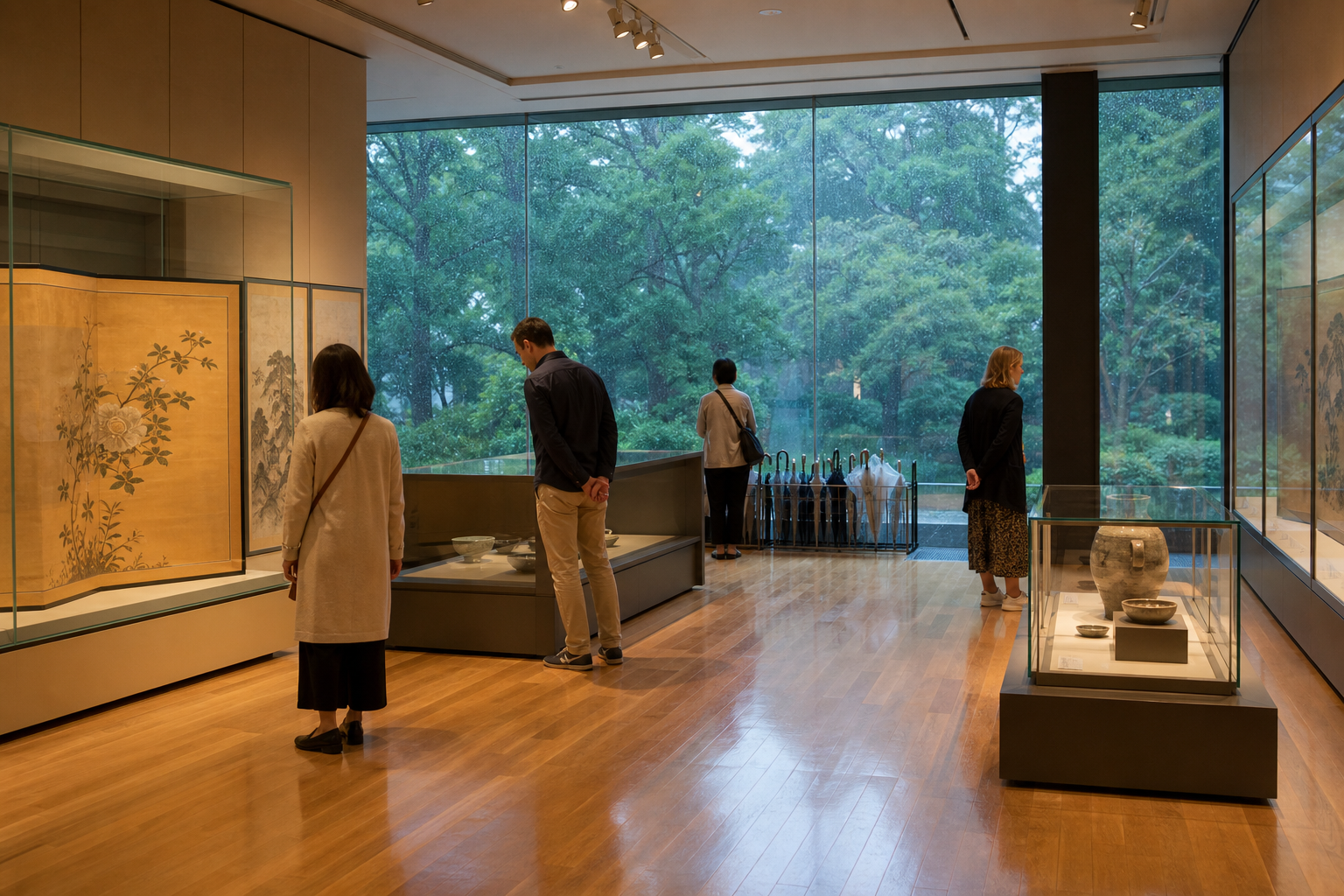
At the Tokyo National Museum, follow one thread—Buddhist sculpture, tea utensils, samurai equipment or the material cultures of Ainu and Ryukyu—rather than treating “Japan” as one style. Compare material, repair and use. At the science museum, ask how collecting and classification shaped modern Japan. At the Western Art museum, notice Le Corbusier’s building as well as the collection. Labels may be multilingual, but availability varies; download official guides before arrival if you need them.
Marunouchi: a shorter architecture-focused alternative
Tokyo Station’s restored Marunouchi red-brick building is convenient for travelers with luggage or a late train. Look up into the domes from the Marunouchi North and South entrances, then choose one nearby museum or gallery whose current exhibition genuinely interests you. Exhibition fees and closing days vary, so do not build the day around an old social-media post. Station buildings are active transport spaces: stand aside, never block ticket gates and ask before photographing staff or shops.
Odaiba: make Miraikan the family anchor
Miraikan (2-3-6 Aomi, Koto) is about 4 minutes from Telecom Center Station or 5 minutes from Tokyo International Cruise Terminal Station on the Yurikamome. Standard hours are 10:00–17:00, last admission 30 minutes before closing; it is normally closed Tuesdays and Dec. 28–Jan. 1. Permanent exhibition admission is generally ¥630 for adults and ¥210 for ages 6–18; preschool children are free. Dome Theater tickets and special exhibitions are separate. Check the official calendar because closures and fees can change.
Food, luggage, accessibility and wet gear
- Use lockers only after checking size, retrieval time and closing time; do not leave passports or medicine.
- Place umbrellas in the rack or supplied bag. Never lean a dripping umbrella against an exhibit case.
- Ask each facility about step-free station routes, wheelchairs, strollers, assistance dogs, sensory needs and accessible toilets before travel.
- For allergies or religious diets, confirm ingredients and cross-contact directly; a museum café is not automatically allergen-, vegan- or halal-safe.
- Carry a compact towel, spare socks and a waterproof bag for electronics.
Photography and quiet-space etiquette
A camera icon or room notice decides whether photography is allowed; rules may differ by object. No sign is not permission. Avoid flash, tripods, livestreaming and photographing visitors’ faces. Keep voices and translation audio low, do not touch cases, and let others approach popular objects. Wet floors are slippery—walk, and keep children close without turning galleries into play areas.
Five-minute rainy-day checklist
- Check JMA warnings and railway status.
- Confirm the facility’s calendar, timed-entry rules and last admission.
- Choose one zone and no more than two main venues.
- Save addresses and official pages offline; keep a nearby fallback.
- Pack rain protection and leave an hour of buffer.
A good rainy Tokyo day is not a consolation prize. With fewer transfers and a clear cultural question, the weather can create the time and attention that famous outdoor sights often deny.