



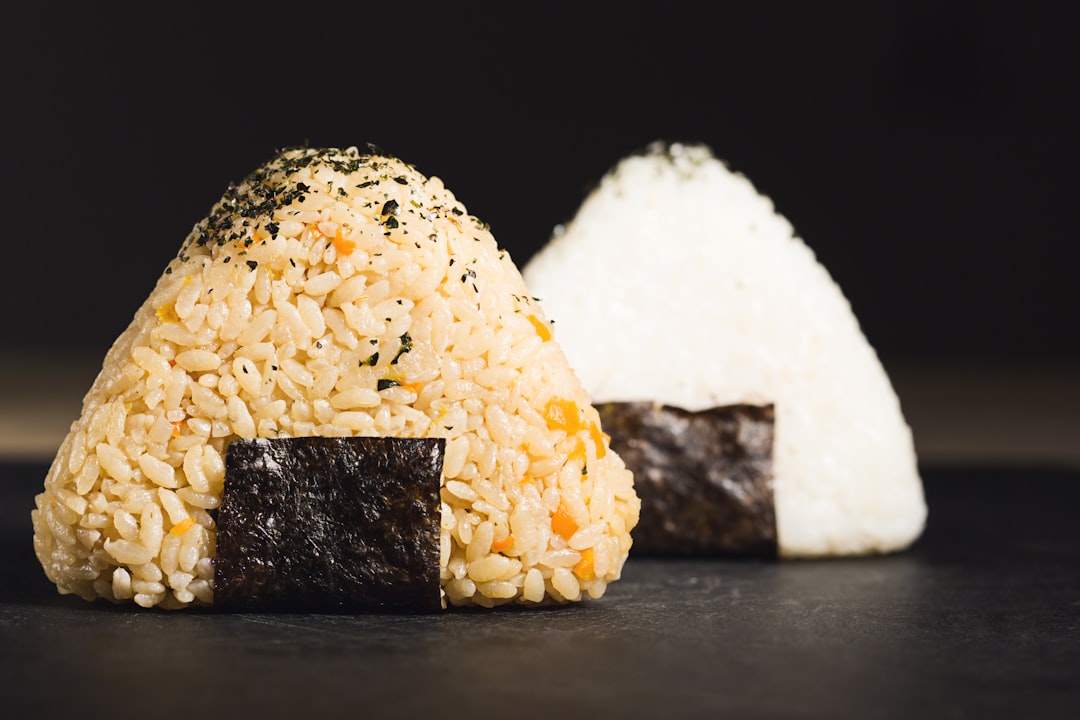
Information checked: August 26, 2026. Onigiri is rice shaped for easy eating, usually with a filling or seasoning and often wrapped in nori. It may be a quick breakfast, part of a bento or a regional specialty—not merely a cheap snack. Prices and selections change by shop, so the most useful skills are decoding the filling, reading the label and opening the wrapper without losing the crisp seaweed.
A portable expression of Japan’s rice culture
Rice parcels have long served as food that needs no plate. One theory traces onigiri to the Heian-period tonjiki; later forms were useful as field lunches and portable provisions. The Ministry of Agriculture notes that sticky japonica rice remains pleasant when cool, helping explain why onigiri fits lunchboxes so well. Names and shapes vary: onigiri and omusubi usually refer to the same food, and triangles are common but not mandatory.
Decode common fillings
| Japanese | Meaning | Watch for |
|---|---|---|
| 鮭 / しゃけ | Salmon | Fish; occasional bones |
| 梅 / 梅干し | Salted pickled plum | Sour, salty; may contain a stone |
| 昆布 | Simmered kombu | Often seasoned with soy sauce |
| ツナマヨ | Tuna mayonnaise | Fish, egg; sauce may contain soy/wheat |
| 明太子 | Seasoned pollock roe | Fish; often spicy |
| おかか | Bonito flakes | Fish and usually soy sauce |
| 高菜 | Pickled mustard greens | May contain sesame or seasoning |
A “vegetable” name does not prove a vegan product: stock, soy sauce, mayonnaise or shared equipment may be involved.
Convenience store, supermarket or specialist?
| Convenience store | Easy to find, individually labeled and frequently replenished; branch selection varies. |
|---|---|
| Supermarket | Often a broader prepared-food section and possible evening markdowns; eat within the printed period. |
| Station shop | Useful before a journey, sometimes with regional ingredients; do not assume every train permits casual eating. |
| Onigiri specialist | Freshly made textures and more choice; opening hours, sell-outs and made-to-order waits vary. |
Compare the displayed tax-inclusive price instead of relying on an old “typical price.” Premium seafood, large sizes and specialist products can cost much more than basic convenience-store versions.
How to open the three-step wrapper
- Hold the triangle upright and pull the center strip marked “1” down and around the back.
- Pull the corner marked “2” sideways, keeping the rice in place.
- Pull corner “3” in the opposite direction; the plastic sheets slide out and the nori closes around the rice.
Designs differ, so follow the arrows on that package. If the nori is already touching the rice, it is meant to be soft rather than crisp. Cup-shaped, cylindrical and warm counter products use different packaging.
Read the label before putting it in your bag
- 消費期限 is the use-by time for safety; do not treat it like a flexible souvenir date.
- 要冷蔵 means refrigeration is required. Do not leave chilled fillings in a hot car or backpack.
- Check the ingredient and allergen panel every time. Tuna mayo, salmon, roe, shrimp tempura and seasoned kombu may involve fish, shellfish, egg, soy, wheat or sesame.
- For a serious allergy, packaged labeling is helpful but cross-contact and language comprehension still matter; ask staff or choose a product you can verify.
Eat with clean hands. Once opened, consume promptly rather than saving half for much later.
Where should travelers eat it?
Good choices include your accommodation, a park bench where eating is allowed, a station waiting area with seats intended for refreshments, or a long-distance train seat where meals are customary. Avoid eating while walking through a crowded market, on a packed commuter train or beside a shop entrance. Keep crumbs and smells contained, and carry the wrapper until you find the correct bin. Store rubbish inside your bag rather than forcing it into a recycling opening.
Frequently asked questions
Is onigiri sushi?
Usually no. Onigiri generally uses plain or seasoned cooked rice, while sushi is defined by vinegared rice.
Is it always wrapped in seaweed?
No. It may be bare, coated in sesame or furikake, wrapped in leaves, or grilled as yaki onigiri.
Can I take it on a flight?
Airport security and destination-country food import rules are separate issues. Eat it before international arrival unless the destination authority clearly permits every ingredient.
Official references: MAFF: Onigiri and Japanese food culture / Consumer Affairs Agency: allergen labeling