



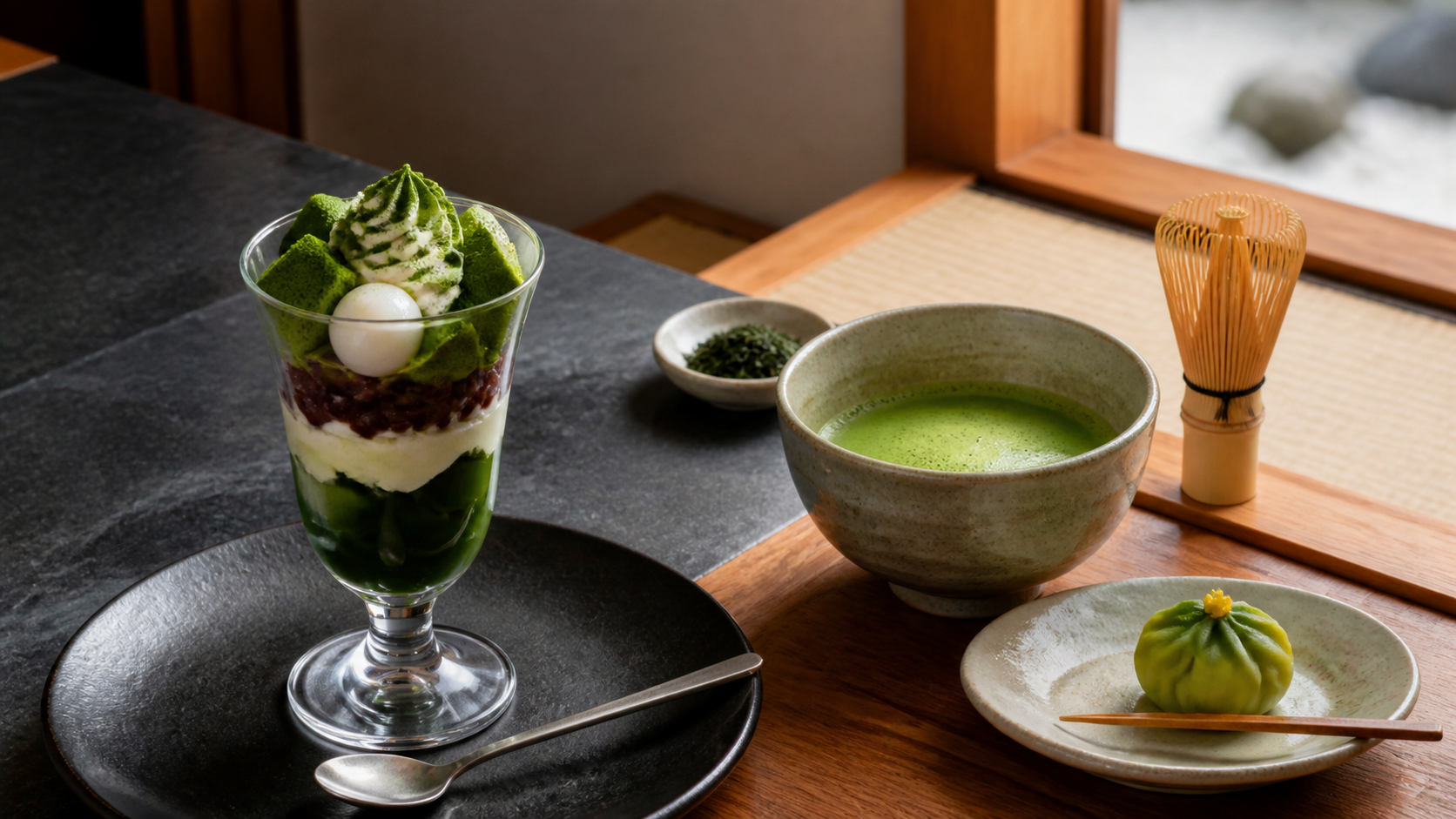
Information checked: August 26, 2026. A green dessert is not automatically a good matcha dessert. The best shops balance tea aroma, umami, bitterness and sweetness—and tell you whose tea they use. This practical guide compares Tokyo’s polished matcha cafés with Kyoto and Uji’s tea-house culture, with verified access, hours, budgets and an itinerary that leaves time to taste rather than queue all day.
Matcha is powdered tencha, not ordinary green tea
Tea leaves grown for matcha are shaded before harvest, processed into tencha, then stone-milled. Because the leaf itself is consumed, aroma and texture matter. Usucha is whisked thin tea; koicha is a dense preparation traditionally made with a higher grade. “Uji matcha” refers to a regional production tradition, but a café in Kyoto is not proof that every green ingredient came from Uji.
Judge a dessert by balance. Brilliant fluorescent colour can come from lighting or formulation; deep colour alone does not prove quality. A serious shop should let tea remain fragrant and pleasantly bitter rather than burying it under sugar.
Choose the experience before choosing the shop
| Order | Best for | What to notice |
|---|---|---|
| Matcha parfait | One-bowl comparison of jelly, ice cream, cream, azuki and shiratama | Whether each layer supports rather than masks the tea |
| Nama-cha jelly | Clear tea flavour and soft texture | Freshness, restrained sweetness and tea served alongside |
| Usucha + namagashi | Traditional seasonal pairing | Eat the sweet first or between sips to soften matcha bitterness |
| Matcha shaved ice | Summer refreshment | Often seasonal and large enough to share where permitted |
| Takeaway baked sweet | Travel-friendly gift | Expiry date, storage and matcha percentage—not just green packaging |
Tokyo: polished presentation without leaving the city
Nakamura Tokichi, GINZA SIX
| Address | GINZA SIX 4F, 6-10-1 Ginza, Chuo-ku, Tokyo |
|---|---|
| Access | Direct underground connection from Ginza Station; also walk from Higashi-ginza |
| Hours | 10:30–20:30; café last order 19:30 |
| Closed | Follows GINZA SIX closure days |
| Budget | Official facility guide: roughly ¥1,000–¥3,000 per person |
| Reservation | Not accepted; one item per guest is expected |
The Uji tea merchant founded in 1854 serves Ginza-only versions of its matcha jelly and parfaits. Choose this stop when you want a substantial composed dessert and an English menu. Go near opening on weekends; the convenient location also attracts shoppers.
Ippodo Aoyama Store / Tearoom
For tea itself rather than a towering dessert, Ippodo’s Tokyo tearoom is the better contrast. Check the official store locator on the day for current hours and closure dates, then order matcha with a seasonal sweet and ask how the tea was prepared. It is a useful lesson in why a restrained sweet can make tea taste rounder.
Kyoto and Uji: tea history becomes part of the visit
Ippodo Kyoto Main Store / Kaboku Tearoom
| Address | 52 Tokiwagi-cho, Nakagyo-ku, Kyoto 604-0915 |
|---|---|
| Access | 5 minutes from Kyoto Shiyakusho-mae Station Exit 11; about 10 minutes from Marutamachi Exit 7 |
| Hours | Shop and tearoom 10:00–17:00; tearoom last order 16:30 |
| Closed | Second Wednesday of each month, plus announced changes |
| Reservation | Tearoom seats are not reserved; reception may end early when busy |
This is the choice for learning to brew, not merely photographing green food. Ask for the hands-on brewing option when ordering; staff can guide you. A separate gyokuro-and-sencha tasting is listed at ¥1,650, requires advance contact, and is not a matcha dessert course.
Nakamura Tokichi Byodoin Store, Uji
| Address | 5-1 Uji Renge, Uji, Kyoto |
|---|---|
| Access | 5 minutes from Keihan Uji Station or 10 minutes from JR Uji Station |
| Hours | Tea shop 10:00–17:00; self-service café 10:00–17:00, last order 16:30 |
| Closed | Irregular holidays |
| Parking | None at this branch |
Combine it with Byodoin and the Uji River. The café uses a historic former inn and is convenient for tea jelly and seasonal sweets. Do not confuse it with the company’s Uji Main Store; the atmosphere, service format and waiting conditions differ.
Which base suits your trip?
| Tokyo | Kyoto / Uji | |
|---|---|---|
| Strength | Easy urban access, refined parfaits, shopping integration | Tea merchants, historic streets, brewing context |
| Time needed | 60–90 minutes for one café | Half a day when combined with Uji or central Kyoto |
| Best first order | One layered parfait plus unsweetened tea | Usucha with namagashi, then one house sweet |
| Main risk | Choosing by social-media colour alone | Spending the day in several similar queues |
Budget, ordering and queue strategy
Allow roughly ¥1,000–¥3,000 for a specialist café, but premium tea flights and limited parfaits can cost more. Menus and tax-inclusive prices change, so use the official menu on the visit date. Say matcha no aji ga wakariyasui osusume wa?—“What do you recommend for tasting the matcha clearly?” If sweetness matters, ask amasa hikaeme (less sweet), though recipes may not be adjustable.
- Choose one Tokyo café or one Kyoto tea room, not every viral shop.
- Arrive near opening or after the first lunch wave; check whether reception closes early.
- Confirm each guest’s minimum order and whether sharing is allowed.
- Photograph quickly after asking, then taste before ice cream melts or matcha foam settles.
- For gifts, check expiry, refrigeration and airline or destination-country food rules.
Milk, egg, gluten and respectful behaviour
Matcha itself is plant-based and gluten-free, but parfaits commonly contain milk, egg and wheat; jelly, cream, sponge, wafers and sauces may also contain soy, gelatin, nuts or sesame. Shiratama is rice-based, while namagashi recipes vary. “No visible dairy” is not a vegan guarantee, and shared utensils create cross-contact. Show the Consumer Affairs Agency allergy sheet for serious needs.
Tea rooms are not costume sets. Keep voices moderate, do not move bowls or display objects for a photograph, and ask before filming staff. You do not need formal tea-ceremony knowledge in a public café; receive the bowl carefully, enjoy the seasonal design and follow staff guidance.
Two realistic routes and FAQ
Tokyo: Ginza tea break (2–3 hours)
Walk Ginza’s main streets, enter GINZA SIX near opening, share conversation over one composed dessert per person, then continue to a gallery or depachika. Avoid carrying refrigerated sweets for the rest of a hot day.
Kyoto–Uji: tea landscape half-day (4–5 hours)
Travel to Uji in the morning, see Byodoin and the river, visit one tea merchant, then return to Kyoto. If you prefer brewing instruction, stay in central Kyoto and use Ippodo Kaboku instead of adding Uji.
Is ceremonial-grade matcha necessary for sweets?
Japan has no single legally binding “ceremonial grade.” Dessert matcha should be judged by origin transparency, freshness and flavour fit, not that English label alone.
Can I reserve the famous cafés?
Many do not accept seat reservations. Confirm the individual branch, because shop and tasting-event rules differ.
When is matcha season?
Matcha is sold year-round. New tea is harvested in spring, but tencha is traditionally refined and rested; seasonal sweets change more visibly than café availability.
Official references: GINZA SIX: Nakamura Tokichi / Ippodo Kyoto Main Store / Ippodo tea experiences / Nakamura Tokichi Byodoin Store